

As a provider of Speaker Network Boards, I've witnessed firsthand the intricate dance between these boards and digital signal processors (DSPs). This interaction is at the heart of modern audio systems, enabling high - quality sound reproduction and advanced audio processing capabilities. In this blog, I'll delve into the details of how a Speaker Network Board interacts with a DSP, shedding light on the technical aspects and real - world implications.
Understanding the Basics: Speaker Network Board and DSP
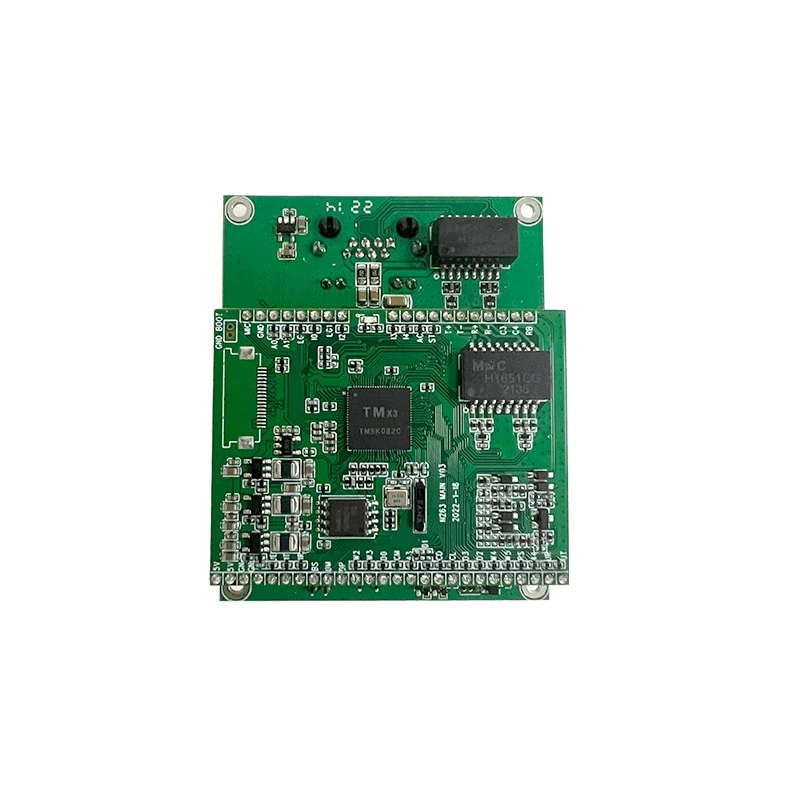
Before we explore their interaction, let's briefly define what a Speaker Network Board and a DSP are. A Speaker Network Board is a crucial component in audio systems that manages the distribution of audio signals to multiple speakers. It ensures that the signals are properly routed, amplified, and balanced to achieve optimal sound quality across the speaker array.
On the other hand, a digital signal processor is a specialized microprocessor designed to perform mathematical operations on digital signals in real - time. In the context of audio, a DSP can handle tasks such as equalization, filtering, compression, and noise reduction. It takes the raw audio data and manipulates it to enhance the sound according to specific requirements.
The Initial Signal Flow
The interaction between a Speaker Network Board and a DSP begins with the signal flow. The audio source, which could be a microphone, a media player, or a streaming device, sends a digital audio signal to the DSP. The DSP then processes this signal, applying various algorithms to improve its quality. For example, it might adjust the frequency response to compensate for the acoustic characteristics of the listening environment or apply dynamic range compression to prevent distortion.
Once the DSP has finished processing the signal, it sends the modified digital audio data to the Speaker Network Board. The board acts as a distribution hub, receiving the processed signal and splitting it into multiple channels if necessary. This is particularly important in multi - speaker systems, where different speakers are responsible for reproducing different frequency ranges or sound elements.
Communication Protocols
To ensure seamless interaction between the Speaker Network Board and the DSP, they need to communicate using a common protocol. There are several communication protocols available, each with its own advantages and limitations.
One of the most widely used protocols is the I2S (Inter - IC Sound) protocol. I2S is a serial communication protocol specifically designed for transferring digital audio data between integrated circuits. It provides a simple and efficient way for the DSP to send the processed audio data to the Speaker Network Board. The protocol uses separate lines for the clock, data, and word select signals, ensuring accurate and synchronized data transfer.
Another popular protocol is the AES3 (Audio Engineering Society/European Broadcasting Union 3) protocol. AES3 is a professional audio protocol that supports high - quality audio transmission over long distances. It is commonly used in professional audio systems, such as recording studios and live sound setups. The Speaker Network Board and the DSP can use AES3 to communicate with each other, ensuring that the audio signal remains pristine throughout the transmission process.
Power and Control Signals
In addition to the audio data, the Speaker Network Board and the DSP also exchange power and control signals. The power signals are used to supply the necessary electrical energy to the components, ensuring that they operate correctly. The control signals, on the other hand, are used to manage the operation of the board and the DSP.
For example, the DSP might send a control signal to the Speaker Network Board to adjust the volume of a particular speaker channel. The board then receives this signal and modifies the amplification level accordingly. Similarly, the Speaker Network Board can send feedback signals to the DSP, indicating the status of the speakers or any potential issues. This two - way communication allows for real - time monitoring and adjustment of the audio system.

Real - World Applications
The interaction between the Speaker Network Board and the DSP has numerous real - world applications. In home audio systems, this combination enables users to enjoy high - quality sound with advanced features such as surround sound and audio customization. The DSP can analyze the acoustic properties of the room and adjust the audio signal accordingly, while the Speaker Network Board ensures that the sound is evenly distributed across all the speakers.
In commercial settings, such as theaters, concert halls, and public address systems, the interaction between the two components is even more critical. These environments require precise audio control and high - fidelity sound reproduction. The DSP can perform complex audio processing tasks, such as beamforming to direct sound towards specific areas, while the Speaker Network Board manages the distribution of the processed signal to a large number of speakers.
Another important application is in Intercom Board and VoIP Board systems. In these systems, the DSP can enhance the voice quality by removing background noise and improving the clarity of the speech. The Speaker Network Board then distributes the processed voice signal to the appropriate speakers, ensuring clear communication between different parties.
Challenges and Solutions
Despite the many benefits of the interaction between the Speaker Network Board and the DSP, there are also some challenges that need to be addressed. One of the main challenges is the synchronization of the audio signal. Any delay or misalignment between the DSP and the Speaker Network Board can result in audible artifacts, such as echo or phase cancellation.
To overcome this challenge, manufacturers use techniques such as clock synchronization and buffering. Clock synchronization ensures that the DSP and the Speaker Network Board are operating at the same clock frequency, while buffering helps to store the audio data temporarily, allowing for smooth and continuous playback.
Another challenge is the power consumption. Both the DSP and the Speaker Network Board require a significant amount of power to operate, especially in high - performance systems. To reduce power consumption, manufacturers are constantly developing more energy - efficient components and optimizing the design of the audio system.
Conclusion
The interaction between a Speaker Network Board and a digital signal processor is a complex but essential aspect of modern audio systems. By working together, these two components enable high - quality sound reproduction, advanced audio processing, and efficient signal distribution. Whether in home audio systems, commercial sound setups, or communication devices, the combination of a Speaker Network Board and a DSP plays a crucial role in delivering an immersive audio experience.
If you're interested in learning more about our Speaker Network Boards or exploring how they can be integrated with your existing audio systems, we'd love to hear from you. Our team of experts is ready to assist you in finding the best solutions for your specific needs. Contact us to start a procurement discussion and take your audio system to the next level.
References
- Smith, J. (2018). Digital Signal Processing: A Practical Guide for Engineers and Scientists. Elsevier.
- Audio Engineering Society. (2020). AES3 Standard for Digital Audio Interface.
- I2S Protocol Specification. (2021). NXP Semiconductors.