


Analog Audio
Your Professional Analog Audio Supplier
XIAMEN TONMIND TECHNOLOGY CO., LTD (TONMIND) is a high-tech company specializing in network audio and IP PA solutions since 2014. With an R&D center in Xiamen Software Center, over 50% of the office staff are professional engineers.Tonmind has officially become a member of ONVIF. Tonmind's products are interoperable with IP camera VMS systems via ONVIF, providing a more efficient and compatible selection of audio devices for public security.




Why Choose Us
Production Market
Our products have been sold to many countries worldwide, with impressive performance in regions such as Europe, North America, and Asia. We have exclusive agents in India, Russia, Uruguay, and resellers in various countries and regions.
Quality control
In the processing of production, our professional technical engineers inspect the processing to ensure the quality of products,After our machine finish , our engineer will make 24 hours test constantly and ensure the machine reach to the best performance.
Product Application
We provide comprehensive IP audio and public address (PA) solutions worldwide, catering to a wide range of industries such as education, retail, malls, commercial complexes, offices, hospitality, and healthcare facilities.
Custom Service
We offer OEM/ODM customization services that allow customers to make tailored requests for our software and audio products. This flexibility ensures that you get the best products suited for your specific applications.
Advantages of Analog Audio
Sound Aesthetics:
Some people prefer the warmer, more natural sound often associated with analog recordings.
Artistic Expression:
Analog recording can offer a unique creative process due to its limitations and characteristics.
Tactile Experience:
Analog recording involves physical interaction with equipment, which some find enjoyable and immersive.
Vintage Appeal:
Analog recordings have historical and nostalgic value, and analog equipment can be visually appealing.
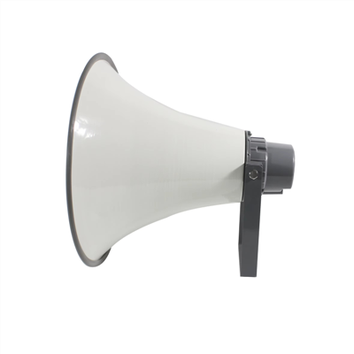
Specification
|
Rated Power |
20W |
|
Power at 100V |
2.5W/5W/10W/20W |
|
Power at 70V |
1.25W/2.5W/5W/10W |
|
SPL( 1W/1M) |
93dB |
|
Max SPL@ 1M |
106dB |
|
Freq. Response |
130Hz-17KHz |
|
Dispersion Angel |
100Degree |
|
Product Size |
138×205mm |
|
Installation |
Wall |
|
Enclosure Material |
Aluminum |
|
Weight |
2.4KG |
|
Finish |
White |
|
Speakers |
5"*1 Full range |
Analog Audio Recording

Sound wave representation:
Analog recording represents sound as continuous waves — the electrical signal generated by a microphone's diaphragm or any sound source directly analogies the original sound.

Storage:
The captured analog signal is stored on a physical medium, typically a magnetic tape. The signal is stored continuously and smoothly, without any discrete steps.

Signal processing:
These types of recordings can undergo various signal processing techniques, like equalization and compression, which manipulate the electrical signals directly. These processes can enhance or modify the sound.

Playback:
To play back an analog recording, a playback device reads the physical medium and converts the analog signal back into audible sound (turntable for vinyl records or reel-to-reel machine for tape).
Analog Audio processing is wide range of applications
Electronics:
Analog Audio processing is used in electronic circuits to amplify, filter, and modulate signals. For example, analog amplifiers are used to increase the strength of a signal, while analog filters are used to remove unwanted frequencies from a signal.
Communications:
Analog Audio processing is used in communication systems to transmit and receive signals. For example, analog modems are used to convert digital signals to analog signals for transmission over telephone lines.
Control systems:
Analog Audio processing is used in control systems to control devices such as motors, valves, and robots. For example, analog feedback controllers are used to maintain a desired set point in a system, such as the temperature of a room.
Sensors:
Analog Audio processing is used in sensors to convert physical quantities into electrical signals. For example, analog temperature sensors convert temperature into a voltage signal.
The conversion process of Analog Audio
Converting analog audio to a digital format typically requires the use of an analog-to-digital converter, or ADC. This converter samples the wave of the analog data and prepares it for conversion to a digital format. Two main variables must be considered during the sampling. The first variable is the sampling rate. This refers to the number of samples taken per second. The higher the sampling rate, the more closely the digital file will resemble the original analog audio. The second variable is sampling precision, which controls how many different gradations will be possible when taking the sample.
The conversion process is two-fold. In the first conversion, the analog audio is converted into a purely digital format. Afterward, the digital data is converted back into a new analog format. This may seem a bit redundant, but it’s a crucial step to ensure the audio can be played correctly over speakers, computers, or cell phones. This final step in the conversion process transforms the binary code of the digital audio back into a soundwave that human ears can hear and understand. Without this final step, the digital file would sound more like static.
All analog audio files vary slightly, but almost all of them undergo similar digitization processes.
FAQ
As one of the leading analog audio manufacturers and suppliers in China, we warmly welcome you to wholesale high-grade analog audio from our factory. All customized products are with high quality and competitive price.
analog audio exchange policy, analog audio market share time, analog audio voltages