

Hey there! As a supplier of SIP Door Intercoms, I've had my fair share of customers asking about the network requirements for these nifty devices. So, I thought I'd put together this blog post to break it all down for you.
First off, let's talk about what a SIP Door Intercom is. A SIP (Session Initiation Protocol) Door Intercom is a type of intercom system that uses IP (Internet Protocol) technology to communicate. It allows you to have two - way audio and sometimes video communication between the door and an indoor device, like a phone or a control panel. You can check out our SIP Door Intercom for more details.
Bandwidth Requirements
One of the most crucial network requirements for a SIP Door Intercom is bandwidth. Bandwidth is basically the amount of data that can be transferred over your network in a given amount of time. For a basic audio - only SIP Door Intercom, you'll typically need a minimum of 80 kbps (kilobits per second) for each call. This is because audio data needs to be continuously streamed between the intercom at the door and the receiving device inside.
If you're using a SIP Door Intercom with video capabilities, the bandwidth requirements go up significantly. Video data is much larger than audio data, so you'll need at least 512 kbps for a low - resolution video stream. For high - definition video, you might need anywhere from 1 Mbps (megabit per second) to 3 Mbps. This ensures that the video is smooth and there are no lag or buffering issues.
Latency
Latency is another important factor. Latency refers to the delay between when a signal is sent and when it is received. In the context of a SIP Door Intercom, low latency is crucial for a natural - feeling conversation. If the latency is too high, there will be a noticeable delay between when someone speaks at the door and when their voice is heard inside.
Ideally, the latency for a SIP Door Intercom should be less than 150 milliseconds. This can be achieved by having a stable and fast network. A high - latency network can make the conversation feel choppy and disjointed, which is not what you want when someone is at your door.
Network Stability
Network stability is key for the proper functioning of a SIP Door Intercom. Unstable networks can lead to dropped calls, poor audio quality, and even complete system failures. To ensure network stability, you should have a reliable Internet service provider (ISP). A wired network is generally more stable than a wireless one, so if possible, connect your SIP Door Intercom using an Ethernet cable.
If you have to use a wireless network, make sure your Wi - Fi signal is strong and there are no interference issues. You can use a Wi - Fi analyzer app to check the signal strength and identify any potential sources of interference, like other wireless devices or neighboring networks.
Quality of Service (QoS)
Quality of Service, or QoS, is a feature that allows you to prioritize certain types of network traffic. For a SIP Door Intercom, it's important to prioritize the traffic related to the intercom system. This means that if there are other devices on your network using a lot of bandwidth, like a computer downloading a large file, the SIP Door Intercom traffic will still get enough resources to function properly.
Most routers support QoS settings. You can configure your router to give priority to the IP addresses of your SIP Door Intercom and the receiving devices. This helps in maintaining the quality of the audio and video streams, even when there is a lot of network activity.
Firewall and NAT
Firewalls and Network Address Translation (NAT) can also affect the performance of a SIP Door Intercom. A firewall is a security feature that blocks unauthorized access to your network. While firewalls are important for security, they can sometimes block the traffic needed for the SIP Door Intercom to work.
You need to configure your firewall to allow SIP and RTP (Real - Time Transport Protocol) traffic. SIP is used for setting up and managing the calls, while RTP is used for carrying the audio and video data.
NAT is a technology that allows multiple devices on a local network to share a single public IP address. Some SIP Door Intercoms might have issues with NAT, as it can make it difficult for the intercom to establish a connection with the receiving device. In such cases, you might need to use a technique called NAT traversal, which can help the intercom communicate through the NAT device.
Compatibility with SIP Server
Your SIP Door Intercom needs to be compatible with a SIP server. A SIP server is responsible for managing the calls and routing them to the correct devices. There are different types of SIP servers available, and you need to make sure that your intercom is compatible with the server you are using.
Some SIP Door Intercoms come with their own built - in SIP server, while others require an external server. If you're using an external server, you'll need to configure the intercom to connect to it. This usually involves entering the server's IP address, port number, and authentication details.

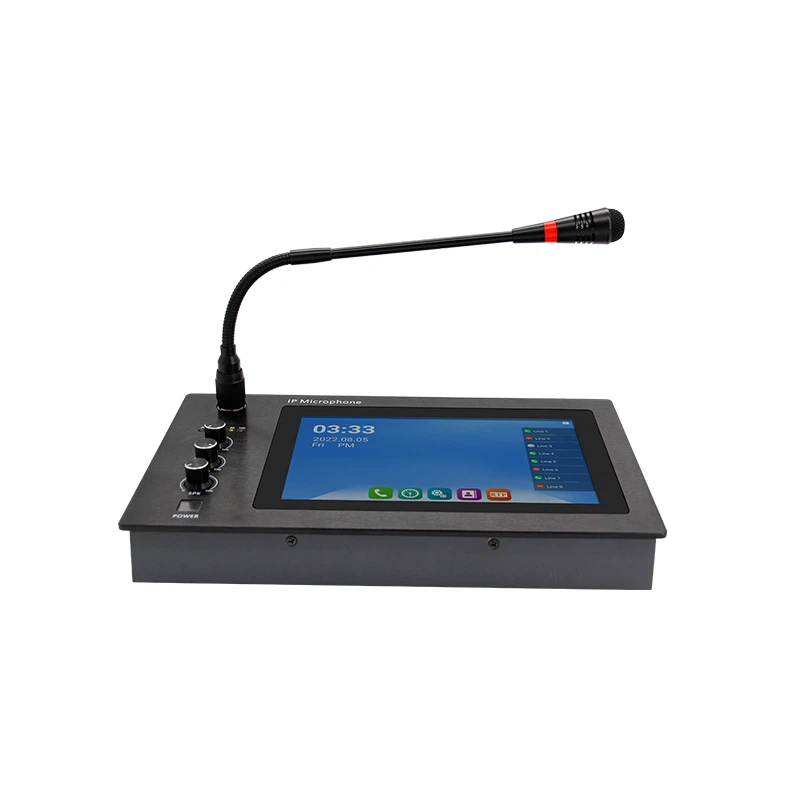
Microphone and Speaker Requirements
The quality of the SIP Microphone and Intercom Speaker Microphone also plays a role in the overall performance of the SIP Door Intercom. A good microphone should be able to pick up clear audio, even in noisy environments. It should have a wide frequency response and low background noise.
The speaker should be able to produce clear and loud audio so that the person at the door can hear the response clearly. Make sure that the microphone and speaker are properly installed and positioned for optimal performance.
In conclusion, setting up a SIP Door Intercom requires careful consideration of several network requirements. From bandwidth and latency to network stability and compatibility, each factor plays a crucial role in ensuring that your intercom system works smoothly.
If you're in the market for a high - quality SIP Door Intercom and have questions about the network requirements or need help with the installation, don't hesitate to reach out. We're here to assist you every step of the way. Whether you're a homeowner looking to enhance your security or a business owner in need of a reliable communication system at your entrance, our SIP Door Intercoms are a great choice. Contact us to start the procurement process and let's get your intercom system up and running!
References
- Cisco Systems. (2023). Understanding SIP and RTP for Voice over IP.
- Juniper Networks. (2023). Network Quality of Service Best Practices.