

In the dynamic landscape of audio technology, the emergence of IP Audio Device Software has marked a significant shift from traditional audio software. As a supplier of IP Audio Device Software, I've witnessed firsthand the transformative impact of this technology on various industries. This blog post aims to explore the differences between IP Audio Device Software and traditional audio software, highlighting the unique advantages that our software brings to the table.
Architecture and Connectivity
Traditional audio software typically operates within a closed - loop system. It often relies on direct physical connections such as cables to transfer audio signals between devices. For example, in a traditional recording studio setup, audio interfaces are connected to computers via USB or FireWire cables. This approach has limitations in terms of scalability and flexibility. If you want to expand the system, you need to physically add more cables and devices, which can quickly become a complex and cumbersome process.
On the other hand, IP Audio Device Software leverages the power of Internet Protocol (IP) networks. It allows audio devices to communicate over a local area network (LAN) or even a wide area network (WAN). This means that audio can be transmitted across long distances without the need for extensive cabling. For instance, a large - scale public address system in a campus or an industrial complex can be easily managed using IP Audio Device Software. The software enables seamless integration of multiple audio sources and endpoints, regardless of their physical location within the network. This is a game - changer for businesses that require a distributed audio solution. You can check out our VoIP Public Address System to see how this technology is applied in real - world scenarios.
Scalability
Scalability is a crucial factor when it comes to audio systems, especially for growing businesses. Traditional audio software has inherent limitations in this regard. Adding new devices or expanding the system often requires significant hardware upgrades and re - configuration. For example, if a small business wants to add more speakers to its existing audio system, it may need to purchase a new amplifier with more channels and re - wire the entire setup. This not only incurs high costs but also disrupts the normal operation of the business.
IP Audio Device Software, however, offers unparalleled scalability. Since it operates over an IP network, adding new audio devices is as simple as connecting them to the network and configuring them through the software. There is no need for complex hardware upgrades. For example, a company that wants to expand its audio system in multiple office buildings can easily add new speakers or audio sources without major disruptions. Our PA System For Office Buildings is designed to be highly scalable, allowing businesses to grow their audio infrastructure as needed.
Flexibility and Customization
Traditional audio software is often designed with a specific set of functions and features. While it can perform basic audio tasks such as recording, playback, and mixing, it may not be easily customizable to meet the unique needs of different users. For example, a traditional audio mixing console has a fixed set of controls and channels, and it can be difficult to modify its functionality without significant technical expertise.
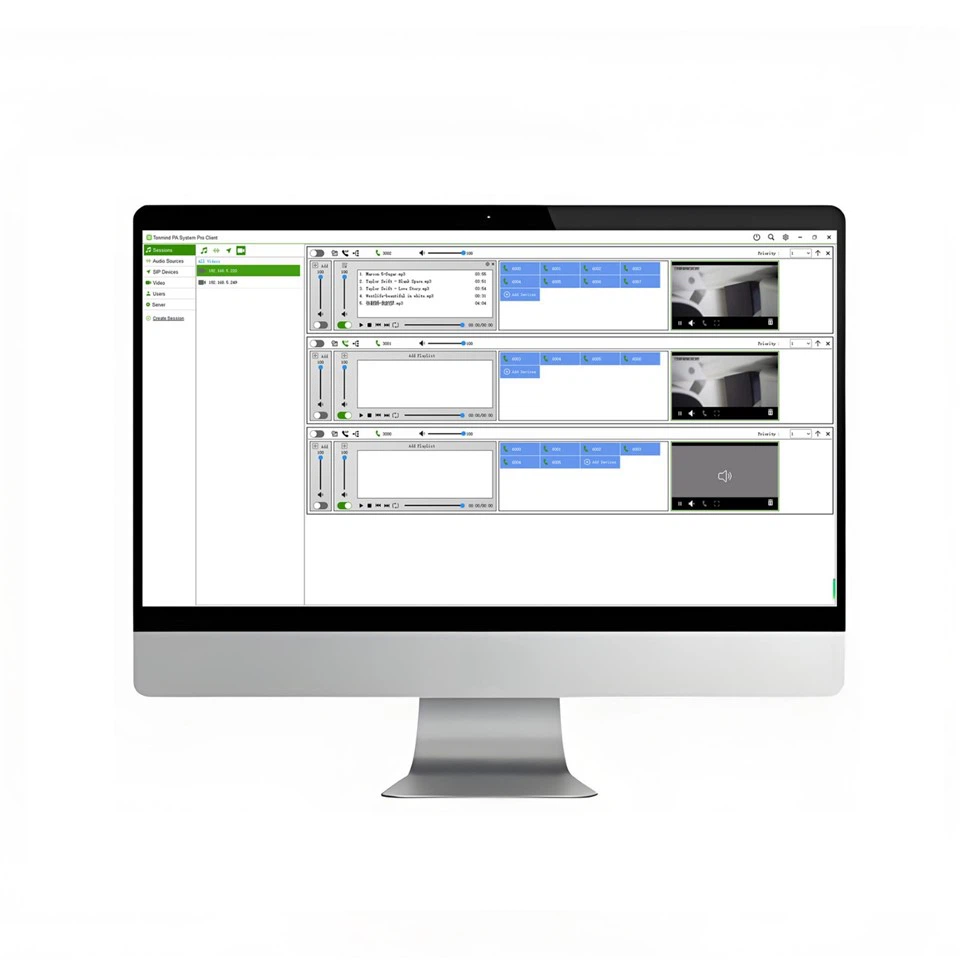

IP Audio Device Software, on the other hand, offers a high degree of flexibility and customization. It allows users to define their own audio routing, create custom presets, and integrate with other software systems. For example, a media production company can use our software to create a customized audio workflow that integrates with their video editing software. Our Audio Device Manager Software provides a user - friendly interface that enables users to easily customize their audio systems according to their specific requirements.
Real - Time Performance
In applications where real - time audio processing is critical, such as live events or emergency communication systems, traditional audio software may face challenges. The latency introduced by physical cables and the processing limitations of traditional hardware can result in noticeable delays in audio transmission. This can be a major problem in situations where synchronization is essential, such as in a multi - speaker public address system.
IP Audio Device Software is designed to minimize latency and ensure real - time performance. It uses advanced algorithms and network protocols to optimize audio transmission over IP networks. For example, in a live concert, our software can ensure that the audio is delivered to all speakers simultaneously, providing a seamless and immersive experience for the audience.
Remote Management and Monitoring
One of the most significant advantages of IP Audio Device Software is its ability to enable remote management and monitoring. Traditional audio software requires on - site access to the audio equipment for configuration and troubleshooting. This can be a problem for businesses with multiple locations or for systems that are installed in hard - to - reach areas.
With IP Audio Device Software, users can manage and monitor their audio systems from anywhere in the world. They can remotely adjust volume levels, change audio sources, and diagnose problems using a web - based interface. This not only saves time and resources but also improves the overall efficiency of the audio system. For example, a facility manager can monitor and control the audio system in a large shopping mall from their office, without having to physically visit each audio device.
Cost - Effectiveness
When considering the total cost of ownership, IP Audio Device Software often proves to be more cost - effective than traditional audio software. Traditional audio systems require significant upfront investment in hardware, such as amplifiers, mixers, and cables. In addition, the cost of maintenance and upgrades can be substantial over time.
IP Audio Device Software reduces the need for expensive hardware by leveraging existing IP networks. The software can be installed on standard servers or even on cloud - based platforms, eliminating the need for dedicated audio hardware in many cases. This results in lower upfront costs and reduced maintenance expenses. Moreover, the scalability of IP Audio Device Software means that businesses can expand their audio systems gradually, without having to make large - scale investments at once.
Conclusion
In conclusion, IP Audio Device Software offers a wide range of advantages over traditional audio software. Its architecture, scalability, flexibility, real - time performance, remote management capabilities, and cost - effectiveness make it the ideal choice for modern businesses and organizations. As a supplier of IP Audio Device Software, we are committed to providing high - quality solutions that meet the diverse needs of our customers.
If you are interested in exploring how our IP Audio Device Software can benefit your business, we invite you to contact us for a procurement discussion. Our team of experts will be happy to assist you in finding the right solution for your specific requirements.
References
- "Audio System Design Handbook" by Don and Carolyn Davis
- "IP Audio Networking: Principles and Practices" by various industry experts