

As a seasoned supplier of Column PA Speakers, I've often been asked about the distortion rate of these audio devices. In this blog post, I'll delve into what distortion rate means, why it matters, and how it applies to Column PA Speakers.
Understanding Distortion Rate
Distortion in audio refers to any change in the original sound signal as it passes through an audio system. The distortion rate, typically measured as a percentage, indicates the amount of unwanted signal alteration. There are several types of distortion, including harmonic distortion, intermodulation distortion, and crossover distortion.
Harmonic distortion occurs when additional frequencies, known as harmonics, are introduced to the original signal. These harmonics are integer multiples of the fundamental frequency. For example, if the fundamental frequency is 100 Hz, the second harmonic will be 200 Hz, the third harmonic 300 Hz, and so on. Harmonic distortion can make the sound harsh or "fuzzy," especially at high levels.
Intermodulation distortion happens when two or more frequencies interact in a non - linear way, creating new frequencies that are not harmonics of the original signals. This type of distortion can result in a muddled or unclear sound, making it difficult to distinguish individual elements in the audio.
Crossover distortion is mainly associated with amplifier circuits, particularly in Class B and Class AB amplifiers. It occurs at the transition point between the positive and negative halves of the audio signal, causing a small "dropout" or distortion in the sound.
Why Distortion Rate Matters in Column PA Speakers
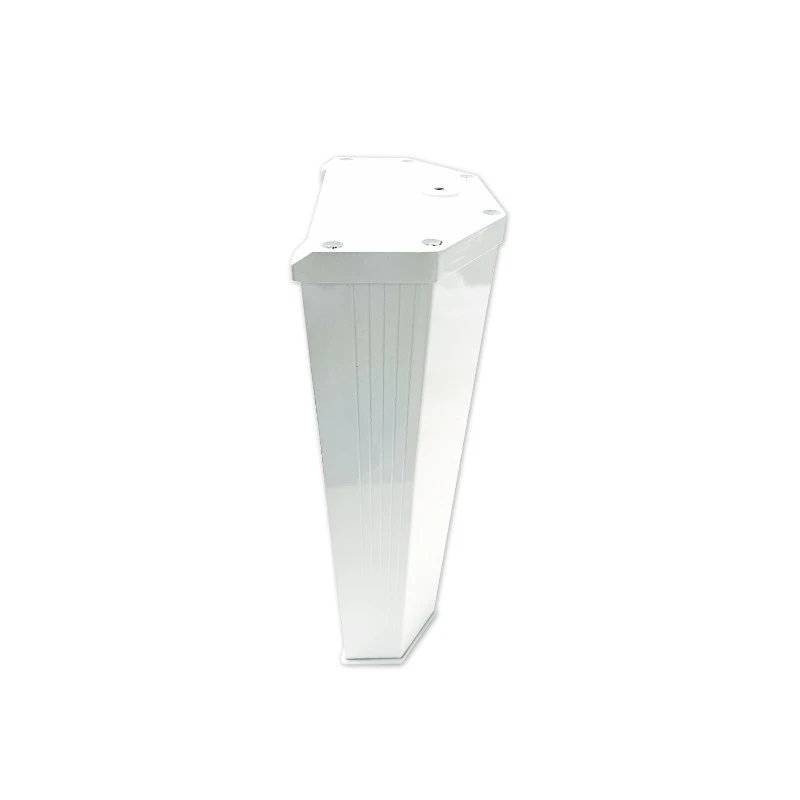
Column PA Speakers are commonly used in a variety of applications, such as public address systems in schools, shopping malls, and outdoor venues. In these settings, clear and accurate audio reproduction is crucial. A high distortion rate can lead to several problems.

First, it can reduce the intelligibility of spoken words. In a public address system, announcements need to be clearly understood by the audience. If the distortion rate is too high, words may become garbled, and important information may be missed.
Second, for music playback, a high distortion rate can ruin the listening experience. Music is meant to be enjoyed in its purest form, and distortion can introduce unwanted noise and artifacts that detract from the original sound quality.
Finally, in a professional setting, a high distortion rate can reflect poorly on the overall quality of the audio system. It may give the impression of a cheap or poorly designed setup, which is not desirable for businesses or organizations.
Factors Affecting the Distortion Rate of Column PA Speakers
Several factors can influence the distortion rate of Column PA Speakers.
Speaker Design
The physical design of the speaker plays a significant role in determining the distortion rate. The size and shape of the speaker enclosure can affect the way sound waves are produced and propagated. A well - designed enclosure can minimize internal reflections and resonances, which can contribute to distortion.
The quality of the speaker drivers also matters. High - quality drivers are designed to move more accurately in response to the audio signal, reducing the likelihood of distortion. For example, a driver with a more rigid cone material can better maintain its shape during vibration, resulting in lower distortion.
Amplifier Quality
The amplifier is responsible for powering the speaker and driving the audio signal. A low - quality amplifier can introduce a significant amount of distortion. An amplifier with poor linearity will not accurately reproduce the input signal, leading to harmonic and intermodulation distortion.
The power rating of the amplifier is also important. If the amplifier is underpowered for the speaker, it may clip the audio signal, causing severe distortion. On the other hand, an overpowered amplifier can also damage the speaker and increase the distortion rate.
Signal Source
The quality of the audio signal source can impact the distortion rate. A low - quality audio file or a poorly adjusted audio mixer can introduce distortion before the signal even reaches the speaker. For example, if the audio file is compressed too much, it may already contain artifacts that will be further amplified by the speaker system.
Measuring the Distortion Rate of Column PA Speakers
The distortion rate of Column PA Speakers is typically measured using a test signal, such as a sine wave. The speaker is driven with the test signal at a specific frequency and power level, and the output signal is analyzed to determine the amount of distortion.
The most common way to express the distortion rate is as a percentage of total harmonic distortion (THD). THD measures the sum of all the harmonic frequencies present in the output signal as a percentage of the fundamental frequency. For example, if the THD is 1%, it means that the total power of all the harmonic frequencies is 1% of the power of the fundamental frequency.
In addition to THD, other parameters such as intermodulation distortion (IMD) can also be measured. IMD provides a more comprehensive view of the distortion in the speaker system, as it takes into account the interaction between multiple frequencies.
Our Column PA Speakers and Distortion Rate
At our company, we are committed to providing high - quality Column PA Speakers with low distortion rates. We use advanced speaker design techniques and high - quality components to ensure accurate audio reproduction.
Our Outdoor Column Speaker is specifically designed for outdoor use. It features a weather - resistant enclosure and high - performance drivers that minimize distortion even in harsh environmental conditions. The enclosure is engineered to reduce internal reflections, and the drivers are carefully calibrated to provide clear and crisp sound.
Our ONVIF Column Speaker is integrated with ONVIF technology, which allows for seamless integration with other security and audio systems. We have paid close attention to the amplifier design and signal processing to ensure that the distortion rate is kept to a minimum. This ensures that the audio quality is not compromised, even when used in complex networked environments.
Our SIP Column Speaker is designed for use in SIP - based communication systems. It offers high - fidelity audio reproduction with low distortion. The speaker is optimized for voice communication, ensuring that every word is clearly transmitted and received.
Conclusion
The distortion rate is a critical parameter when it comes to Column PA Speakers. A low distortion rate is essential for clear and accurate audio reproduction, whether it's for public address systems, music playback, or professional communication. As a supplier, we understand the importance of this parameter and strive to provide products that meet the highest standards of audio quality.
If you are in the market for high - quality Column PA Speakers with low distortion rates, we invite you to contact us for more information and to discuss your specific requirements. Our team of experts is ready to assist you in finding the perfect solution for your audio needs.
References
- Toole, Floyd E. "Sound Reproduction: The Acoustics and Psychoacoustics of Loudspeakers and Rooms." Focal Press, 2019.
- Self, Douglas. "Small Signal Audio Design." Newnes, 2009.
- Everest, F. Alton. "The Master Handbook of Acoustics." McGraw - Hill Education, 2015.