

As a supplier of SIP PCB boards, I've had the privilege of witnessing firsthand how these little marvels play a huge role in today's tech - savvy world. So, what exactly is the function of a SIP PCB board? Let's dig in and find out.
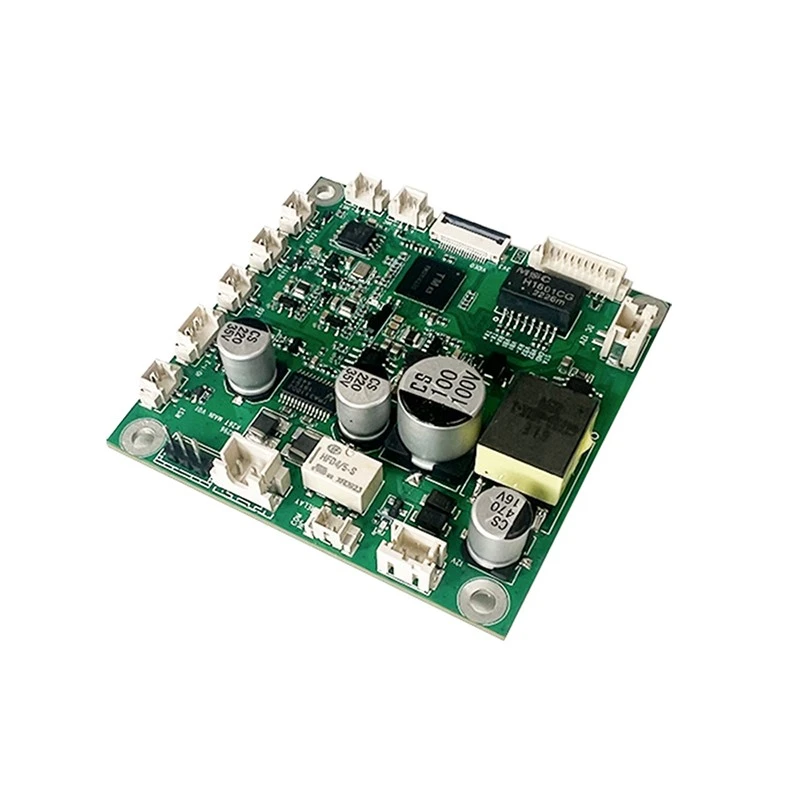

First off, let's get a basic understanding of what a SIP PCB board is. SIP stands for System in Package. A SIP PCB board is a type of printed circuit board that integrates multiple components into a single package. It's like a mini - city of electronics, where different parts work together to achieve a common goal.
One of the primary functions of a SIP PCB board is to provide electrical connections. In any electronic device, components need to communicate with each other. The SIP PCB board acts as a highway for electrical signals. It has conductive traces that connect various components such as microcontrollers, memory chips, and sensors. For example, in a VoIP Board, the SIP PCB board ensures that the audio data can flow smoothly between the codec, network interface, and other related components. Without these proper electrical connections, the device simply won't work.
Another important function is mechanical support. All those tiny and delicate electronic components need a stable platform to sit on. The SIP PCB board provides that support. It's made of a rigid or flexible substrate material that can hold the components in place. This is crucial, especially in devices that might be subject to vibrations or movement. For instance, in an Intercom Board used in a building's entrance system, the SIP PCB board keeps all the components secure, so they can function properly even if the intercom unit gets bumped around a bit.
SIP PCB boards also help in thermal management. Electronic components generate heat when they're working. If this heat isn't dissipated properly, it can cause the components to overheat and malfunction. Many SIP PCB boards are designed with heat - dissipating features. Some have copper layers that can conduct heat away from the components, while others might have heat sinks attached to them. This is particularly important in high - performance devices where a lot of power is being consumed.
In terms of space efficiency, SIP PCB boards are a game - changer. In today's world, we want our electronic devices to be smaller and more portable. By integrating multiple components into a single package, SIP PCB boards save a lot of space. Instead of having a bunch of separate boards and components taking up a large area, everything is consolidated onto one board. Take a modern smartphone, for example. It has a SIP PCB Board that combines the processor, memory, and other essential components. This allows the phone to be thin and lightweight.
SIP PCB boards also contribute to the reliability of electronic devices. Since all the components are integrated and connected on a single board, there are fewer points of failure. There are fewer solder joints and connections that could potentially break or come loose. This means that devices using SIP PCB boards are generally more reliable and have a longer lifespan.
Moreover, SIP PCB boards simplify the manufacturing process. For device manufacturers, it's much easier to work with a single integrated board than to deal with multiple individual components. It reduces the complexity of assembly, testing, and quality control. This leads to faster production times and lower costs.
Now, let's talk about some real - world applications. In the telecommunications industry, SIP PCB boards are used in VoIP phones and routers. They enable high - quality voice communication over the internet by handling the audio encoding, decoding, and network connectivity. In the automotive industry, these boards are used in in - car entertainment systems, navigation systems, and advanced driver - assistance systems (ADAS). They help in processing data from sensors, controlling displays, and ensuring smooth communication between different parts of the vehicle.
In the healthcare sector, SIP PCB boards are used in medical devices such as patient monitors and diagnostic equipment. They play a vital role in accurately measuring and transmitting patient data, like heart rate, blood pressure, and oxygen levels.
In the consumer electronics market, from smartwatches to tablets, SIP PCB boards are everywhere. They make it possible for these devices to offer advanced features in a compact form factor.
If you're in the market for SIP PCB boards, whether you're a large - scale manufacturer or a small - scale developer, I'd love to have a chat with you. Our company has been in the business of supplying high - quality SIP PCB boards for years. We understand the unique requirements of different industries and can provide customized solutions to meet your needs. Whether you need a board for a simple IoT device or a complex telecommunications system, we've got you covered. Reach out to us to start a discussion about your project and how our SIP PCB boards can be the perfect fit.
References
- "Fundamentals of Printed Circuit Boards" by John Doe
- "Advanced Electronics Packaging" by Jane Smith
- Industry reports on SIP technology trends