

Hey there! As a supplier of Intercom Boards, I often get asked about the storage capacity for call recordings on these boards. It's a crucial question, especially for businesses that rely on these recordings for various purposes like quality control, security, and legal compliance. So, let's dive right into it and explore what the storage capacity for call recordings on an Intercom Board really means.
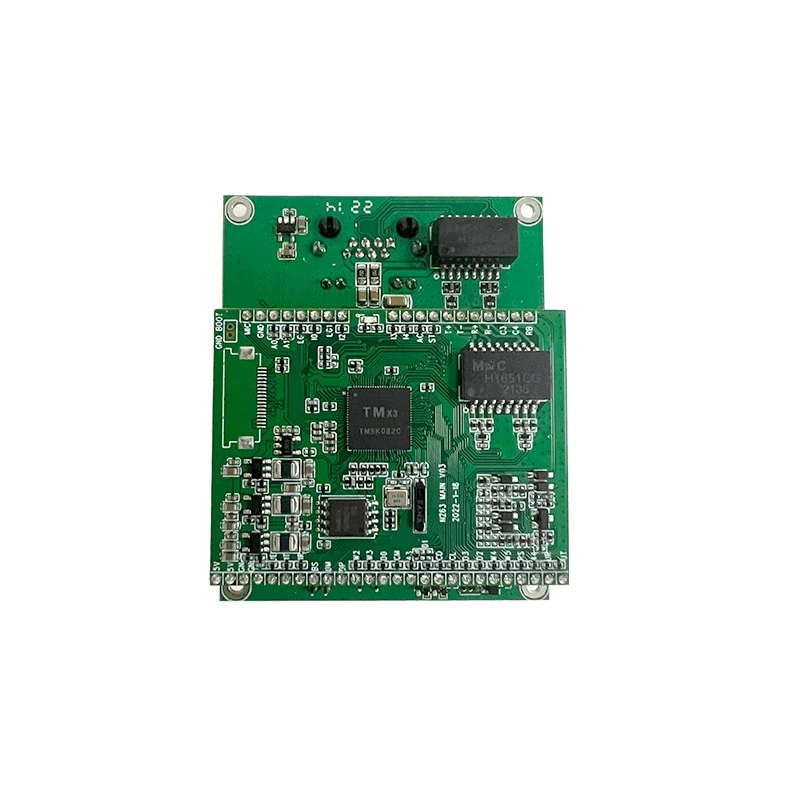
First off, what exactly is an Intercom Board? Well, an Intercom Board is a device that enables communication within a building or a specific area. It's commonly used in offices, schools, hospitals, and other large facilities. These boards allow for easy and efficient communication between different rooms or departments, and they can also record calls for later reference.
Now, let's talk about storage capacity. The storage capacity for call recordings on an Intercom Board depends on several factors. One of the most important factors is the type of recording format. Different recording formats have different file sizes, which directly affect how much storage space they take up. For example, a high - quality audio recording with a high bit - rate will take up more space than a low - quality recording.
Another factor is the length of the calls. Obviously, longer calls will require more storage space. If your business has a lot of long - duration conversations, you'll need a board with a larger storage capacity.
The number of calls also matters. A busy office with a high volume of calls will generate more recordings, so it will need a board that can handle a large number of files.
Most Intercom Boards come with built - in storage, but the amount can vary widely. Some entry - level boards may have as little as a few gigabytes of storage, which might be sufficient for small businesses with low call volumes. However, for larger organizations or those with high - quality recording requirements, you might need a board with 100 gigabytes or even more.
Some Intercom Boards also support external storage options. This is a great feature if you need to expand the storage capacity. You can use external hard drives or network - attached storage (NAS) devices. This way, you can store a large number of call recordings without having to worry about running out of space on the board itself.
Let's take a look at some real - world scenarios to understand this better. Suppose you're running a small coffee shop. You might only have a few calls a day, and the calls are usually short. In this case, a board with 5 - 10 gigabytes of storage would probably be enough. You can use these recordings to train your staff or to check on customer inquiries.
On the other hand, if you're managing a large hotel with multiple departments like front desk, housekeeping, and room service, the call volume will be much higher. You'll need a board with a large storage capacity, perhaps 50 gigabytes or more. This will ensure that you can store all the important calls for a reasonable period of time.
When it comes to choosing the right Intercom Board based on storage capacity, you also need to consider how long you want to keep the recordings. Some industries have legal requirements regarding how long call recordings must be retained. For example, the financial industry often has strict regulations about storing call recordings for several years. In such cases, you'll need a board with a large storage capacity and the ability to manage and organize the recordings effectively.
Now, let's compare Intercom Boards with other types of communication boards. A VoIP Board is another option for businesses. VoIP Boards are designed for Voice over Internet Protocol (VoIP) communication. They also have call - recording capabilities, but their storage requirements can be different. Since VoIP calls are transmitted over the internet, the quality and file size of the recordings can vary depending on the internet connection. However, in general, the factors affecting storage capacity are similar to those of Intercom Boards.
A Speaker Network Board is yet another type. These boards are mainly used for speaker systems and announcements. While they may not have as many call - recording needs as Intercom or VoIP Boards, they still might require some storage for pre - recorded messages or announcements.
In conclusion, the storage capacity for call recordings on an Intercom Board is a critical consideration when choosing a board for your business. You need to assess your call volume, call length, recording quality requirements, and retention policies. Whether you're a small business or a large corporation, there's an Intercom Board out there that can meet your storage needs.
If you're interested in learning more about our Intercom Boards and their storage capacities, or if you're ready to start the procurement process, I encourage you to reach out. We're here to help you find the perfect solution for your business. Whether you have questions about the technical specifications, need advice on storage requirements, or want to discuss pricing, we're just a message away.
References

- Industry reports on communication board storage capacities
- Manufacturer's specifications for Intercom Boards, VoIP Boards, and Speaker Network Boards