

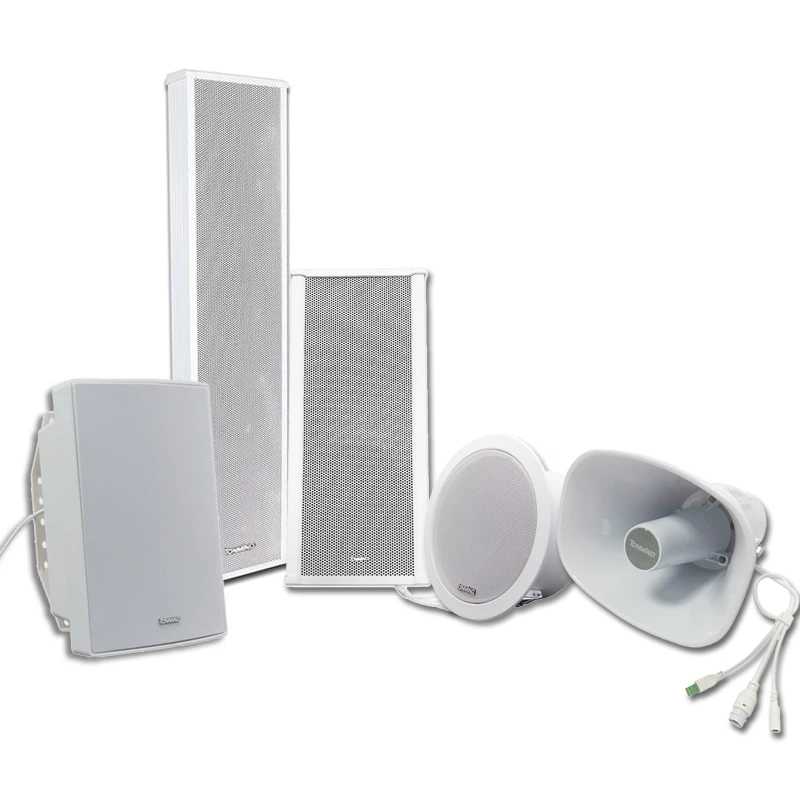
As a supplier of IP speakers, I've often been asked whether our products are suitable for use in train stations. This is a question that delves into various aspects, including technical capabilities, practical requirements, and the overall environment of train stations. In this blog post, I'll explore the viability of using IP speakers in train stations, highlighting their benefits, challenges, and how they can enhance the communication system in these bustling transportation hubs.
Understanding IP Speakers
Before we discuss their application in train stations, let's briefly understand what IP speakers are. IP speakers, or Internet Protocol speakers, are audio devices that use IP networks to transmit audio signals. Unlike traditional analog speakers, which rely on dedicated cables for audio transmission, IP speakers can be connected to a local area network (LAN) or wide area network (WAN), enabling them to receive and play audio content from various sources. This digital approach offers several advantages, such as flexibility, scalability, and remote management.
Benefits of Using IP Speakers in Train Stations
1. Flexibility in Installation
Train stations are large and complex environments with diverse architectural layouts. IP speakers can be easily installed in different locations without the need for extensive cabling. Since they connect to the network, they can be placed anywhere within the network coverage area, allowing for strategic placement to ensure optimal sound distribution. For example, they can be installed on platforms, concourses, waiting areas, and even in train carriages, providing a comprehensive audio system throughout the station.
2. Scalability
As train stations grow and evolve, the audio system needs to be able to expand accordingly. IP speakers offer excellent scalability. New speakers can be easily added to the existing network without significant infrastructure changes. This is particularly useful for stations undergoing expansion or renovation projects. Whether it's adding more speakers to a new platform or upgrading the system to cover a larger area, IP speakers can adapt to the changing needs of the station.
3. Remote Management
One of the most significant advantages of IP speakers is the ability to manage them remotely. Train station operators can use a centralized management system to control all the speakers in the station from a single location. This includes adjusting volume levels, scheduling announcements, and monitoring the status of each speaker. In case of an emergency, operators can quickly broadcast important messages to all or specific areas of the station, ensuring that passengers receive timely information.
4. High - Quality Audio
IP speakers are capable of delivering high - quality audio. They support digital audio formats, which can provide clear and crisp sound, even in noisy train station environments. This is crucial for ensuring that announcements are understood by passengers. Whether it's train schedules, safety instructions, or emergency alerts, high - quality audio ensures that the messages are conveyed accurately.
5. Integration with Other Systems
IP speakers can be easily integrated with other systems in the train station, such as security systems, ticketing systems, and public address and voice evacuation systems. For example, they can be linked to CCTV cameras to provide audio accompaniment to visual surveillance. In the event of an emergency, the public address system can be triggered automatically to broadcast evacuation instructions. You can learn more about Public Address And Voice Evacuation System.
Challenges of Using IP Speakers in Train Stations
1. Network Reliability
Since IP speakers rely on the network for audio transmission, network reliability is a critical factor. Train stations are often crowded places with high network traffic, which can lead to network congestion and potential disruptions. To ensure the smooth operation of the IP speaker system, a robust and reliable network infrastructure is required. This may involve upgrading the existing network, implementing redundant network paths, and using quality network equipment.
2. Environmental Conditions
Train stations are exposed to various environmental conditions, such as dust, moisture, and temperature variations. These conditions can affect the performance and lifespan of the IP speakers. Therefore, the speakers need to be designed to withstand these harsh environments. They should be dust - proof, waterproof, and able to operate within a wide temperature range.
3. Power Supply
Ensuring a stable power supply is essential for the proper functioning of IP speakers. In a train station, power outages or fluctuations can occur, which may disrupt the audio system. Backup power solutions, such as uninterruptible power supplies (UPS), can be used to ensure that the speakers continue to operate during power failures.
4. Security
As IP speakers are connected to the network, they are vulnerable to security threats, such as hacking and unauthorized access. Train station operators need to implement appropriate security measures to protect the IP speaker system. This includes using firewalls, encryption, and regular security updates to prevent potential security breaches.

Case Studies of IP Speaker Usage in Train Stations
There are several successful examples of IP speaker systems being used in train stations around the world. For instance, in a large international train station, an IP speaker system was installed to replace the old analog system. The new system provided better sound quality, more flexibility in installation, and easier management. The station operators were able to broadcast real - time train information, safety announcements, and emergency alerts more effectively. Passengers reported that they could hear the announcements clearly, even in noisy areas of the station.
In another case, a regional train station used IP speakers to enhance its public address system. The speakers were integrated with the station's security system, allowing for coordinated audio and visual alerts in case of emergencies. The scalability of the IP speaker system also enabled the station to add more speakers as the passenger traffic increased over time.
How Our IP Speakers Can Meet the Requirements of Train Stations
As a supplier of IP speakers, we understand the unique requirements of train stations. Our IP speakers are designed to address the challenges mentioned above.
1. Network - Friendly Design
Our speakers are optimized for network performance. They support high - speed data transmission and are compatible with various network protocols. We also offer solutions for network redundancy to ensure continuous operation even in case of network failures.
2. Robust Construction
Our IP speakers are built to withstand the harsh environmental conditions of train stations. They are made of high - quality materials that are dust - proof and waterproof. The speakers are also designed to operate within a wide temperature range, ensuring reliable performance in all seasons.
3. Power Management
We provide power management solutions for our IP speakers. Our speakers can be connected to a UPS system to ensure uninterrupted operation during power outages. Additionally, our speakers are energy - efficient, reducing the overall power consumption of the audio system.
4. Security Features
Security is a top priority for us. Our IP speakers are equipped with advanced security features, such as encryption and access control. We also offer regular security updates to protect the speakers from emerging threats.
Conclusion
In conclusion, IP speakers can be effectively used in train stations. They offer numerous benefits, including flexibility, scalability, remote management, high - quality audio, and integration with other systems. Although there are some challenges, such as network reliability, environmental conditions, power supply, and security, these can be overcome with the right solutions.
If you are a train station operator or involved in the management of a transportation hub, and you are considering upgrading your audio system, our IP speakers could be the ideal solution for you. We are committed to providing high - quality products and excellent customer service. Contact us today to discuss your specific requirements and explore how our IP speakers can enhance the communication system in your train station.
References
- Smith, J. (2020). "Advances in IP Audio Technology for Public Spaces." Journal of Audio Engineering.
- Brown, A. (2019). "Case Studies of IP Speaker Systems in Transportation Hubs." Transportation Technology Review.