

Hey there! As an IP speaker supplier, I often get asked this question: “Do IP speakers have a built - in amplifier?” Well, let's dig into this topic and clear up any confusion.
First off, let's understand what an IP speaker is. An IP speaker is a type of audio device that can receive audio signals over an IP (Internet Protocol) network. This means it can be connected to a local area network (LAN) or even the internet, allowing for flexible audio distribution. You can stream music, announcements, or other audio content to these speakers from a central location.
Now, back to the main question. The answer is: it depends. Some IP speakers do come with a built - in amplifier, while others don't.
IP Speakers with Built - in Amplifiers
IP speakers with built - in amplifiers are pretty convenient. They're all - in - one solutions, which means you don't have to worry about connecting an external amplifier. This simplifies the installation process significantly. For example, if you're setting up a small office or a retail store, you can just connect these speakers to the network, and you're good to go.
These speakers are designed to take the digital audio signal received over the IP network, amplify it, and then play it through the speaker driver. This integrated design reduces the number of components you need to manage, which can save both time and money.
One of the great advantages of IP speakers with built - in amplifiers is their ease of use. You don't need to be an audio expert to set them up. Most of these speakers come with user - friendly interfaces and can be configured using a web - based management system. This allows you to control the volume, select audio sources, and even schedule playlists right from your computer or mobile device.
Another benefit is the space - saving aspect. Since the amplifier is built into the speaker, you don't need to allocate extra space for a separate amplifier unit. This is especially useful in environments where space is limited, such as small kiosks or compact meeting rooms.
However, there are also some limitations. IP speakers with built - in amplifiers might have a limited power output compared to larger, external amplifiers. If you need to cover a large area or require high - volume audio, you might find that these built - in amplifiers aren't powerful enough.
IP Speakers without Built - in Amplifiers
On the other hand, there are IP speakers that don't have a built - in amplifier. These speakers are often referred to as passive IP speakers. They rely on an external amplifier to boost the audio signal.
The main advantage of using passive IP speakers is the flexibility they offer. You can choose an external amplifier that best suits your specific needs. If you need a high - power amplifier to cover a large venue, like a stadium or a concert hall, you can select a powerful external amplifier. This gives you more control over the audio quality and volume.
Passive IP speakers also tend to be more cost - effective in large - scale installations. Since you can use a single, high - quality amplifier to power multiple speakers, you can save money in the long run. This is especially true if you're setting up a public address system for a large campus or a commercial complex.

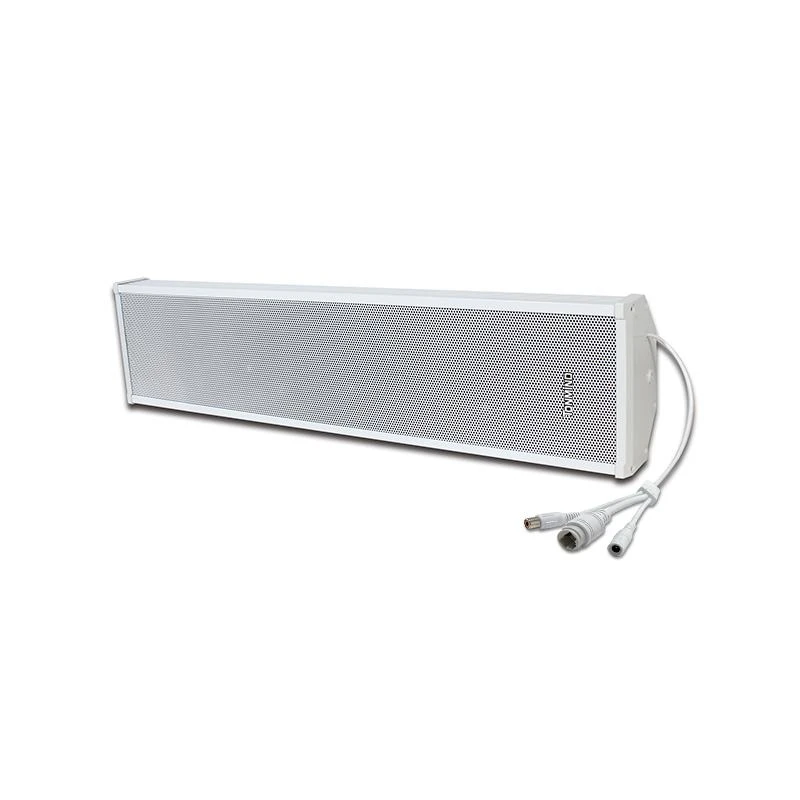
However, the installation process for passive IP speakers is more complex. You need to connect the speakers to an external amplifier, which requires additional wiring and setup. You also need to have a basic understanding of audio systems to ensure that the amplifier is properly matched to the speakers.
Applications and Considerations
The choice between IP speakers with built - in amplifiers and those without depends on the specific application.
For small - scale applications, such as a home audio system or a small business, IP speakers with built - in amplifiers are usually the best choice. They're easy to install, require minimal maintenance, and can provide decent audio quality.
For large - scale applications, like Public Address And Voice Evacuation System, passive IP speakers with external amplifiers are often preferred. These systems need to cover a large area and provide clear, loud audio in case of an emergency or for regular announcements.
When considering which type of IP speaker to choose, you also need to think about the audio quality. Higher - end external amplifiers can often provide better audio fidelity compared to built - in amplifiers. However, if you're not too concerned about the absolute best audio quality and just need a simple, functional system, a built - in amplifier might be sufficient.
Another factor to consider is the budget. IP speakers with built - in amplifiers are generally more expensive upfront, but they can save you money on installation and maintenance. Passive IP speakers are usually cheaper, but you need to factor in the cost of an external amplifier.
Conclusion
So, to sum it up, whether IP speakers have a built - in amplifier or not depends on the specific product. There are pros and cons to both types, and the choice should be based on your specific needs, budget, and application.
If you're still unsure about which type of IP speaker is right for you, don't hesitate to reach out. As an IP speaker supplier, I'm here to help you make the best decision for your audio system. Whether you need a simple setup for a small office or a complex public address system for a large venue, I can provide you with the right products and advice.
If you're interested in purchasing IP speakers or discussing your requirements further, feel free to contact me. I'd be more than happy to have a chat and assist you in finding the perfect solution for your audio needs.
References
- Audio Engineering Society publications on IP - based audio systems
- Industry reports on IP speaker technology and market trends