

Improving the bass performance of a VoIP ceiling speaker is a multifaceted challenge that involves a deep understanding of audio engineering principles, speaker design, and the specific requirements of Voice over Internet Protocol (VoIP) applications. As a leading supplier of VoIP Ceiling Speaker, we are committed to helping our customers achieve the best possible audio quality, especially in the bass range. In this blog post, we will explore various strategies and techniques to enhance the bass performance of your VoIP ceiling speakers.
Understanding the Basics of Bass in VoIP Ceiling Speakers
Before delving into the methods of improving bass performance, it is essential to understand the fundamentals of bass in the context of VoIP ceiling speakers. Bass frequencies typically range from 20 Hz to 200 Hz and are responsible for providing the depth, warmth, and impact to audio. In VoIP applications, clear and powerful bass can enhance the overall communication experience, making voices sound more natural and immersive.
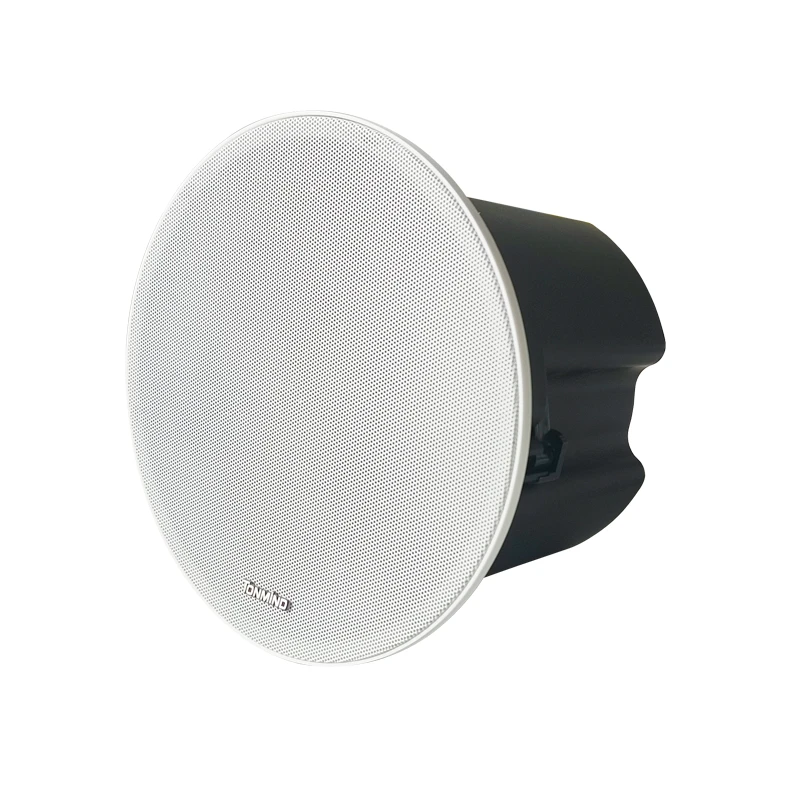

However, achieving good bass performance in ceiling speakers is inherently challenging due to several factors. Ceiling speakers are usually small in size, which limits the physical displacement of the speaker cone and thus restricts the amount of low - frequency sound they can produce. Additionally, the installation environment, such as the ceiling material, room acoustics, and the presence of other objects, can also affect the bass response.
Speaker Design and Component Selection
The design of the speaker and the selection of its components play a crucial role in determining the bass performance.
Driver Size and Design
Larger drivers generally have the potential to produce more bass because they can move more air. When choosing a VoIP ceiling speaker, consider models with larger diameter drivers. For example, a speaker with a 6 - inch or 8 - inch driver is likely to have better bass performance compared to a 4 - inch driver.
The design of the driver also matters. A well - designed driver with a large cone area, a powerful magnet, and a flexible suspension can move more efficiently, resulting in better bass output. Some advanced driver designs use materials like polypropylene or Kevlar for the cone, which offer a good balance of stiffness and lightness, allowing for better low - frequency response.
Enclosure Design
The enclosure of the ceiling speaker affects the bass performance significantly. There are two main types of enclosures commonly used in ceiling speakers: sealed enclosures and ported enclosures.
Sealed enclosures are airtight and provide a tight, accurate bass response. They are less prone to distortion at low frequencies but may have a limited low - frequency extension compared to ported enclosures. Ported enclosures, on the other hand, use a port (or vent) to allow air to move in and out of the enclosure, which can enhance the low - frequency output. However, ported enclosures need to be carefully tuned to the characteristics of the driver to avoid problems such as port noise or a peaky bass response.
Crossover Design
The crossover is a circuit that divides the audio signal into different frequency bands and sends them to the appropriate drivers. A well - designed crossover is essential for achieving good bass performance. It should be able to accurately separate the low - frequency signals and send them to the bass driver with minimal loss or distortion. Some high - end VoIP ceiling speakers use active crossovers, which offer more precise control over the frequency response compared to passive crossovers.
Installation and Placement
Proper installation and placement of the VoIP ceiling speakers can have a significant impact on the bass performance.
Ceiling Material
The material of the ceiling where the speaker is installed can affect the bass response. Harder materials like concrete or plaster ceilings tend to reflect sound better, which can enhance the bass in the room. In contrast, soft materials like acoustic tiles can absorb low - frequency sound, reducing the bass output. If possible, choose a location with a hard ceiling surface for better bass performance.
Speaker Spacing
The spacing between multiple ceiling speakers also affects the bass. When speakers are placed too close together, the bass waves can interfere with each other, causing cancellations and uneven bass distribution. On the other hand, if the speakers are placed too far apart, there may be areas in the room with poor bass coverage. As a general rule, for optimal bass performance, space the speakers according to the manufacturer's recommendations, which usually take into account the speaker's dispersion pattern and the size of the room.
Room Acoustics
The overall acoustics of the room play a vital role in the bass performance. Rooms with a lot of hard surfaces, such as bare walls and floors, can cause excessive bass reflections, leading to a boomy or muddy sound. To improve the bass, consider adding acoustic treatment to the room. Bass traps, which are designed to absorb low - frequency sound, can be placed in the corners of the room where bass tends to accumulate. Diffusers can also be used to scatter the sound and create a more even sound field.
Signal Processing and Equalization
Signal processing and equalization techniques can be used to enhance the bass performance of VoIP ceiling speakers.
Digital Signal Processing (DSP)
Many modern VoIP ceiling speakers are equipped with Digital Signal Processing capabilities. DSP allows for precise control over the audio signal, including the ability to adjust the bass response. With DSP, you can apply filters to boost the low - frequency range, correct for any frequency response irregularities, and optimize the speaker's performance for the specific installation environment.
Equalization
Equalization (EQ) is a common technique used to adjust the frequency response of an audio system. By using an EQ, you can boost the bass frequencies to compensate for the limitations of the speaker. However, it is important to use EQ carefully, as over - boosting the bass can lead to distortion and a less natural sound. A parametric EQ provides more precise control over the frequency, bandwidth, and gain, allowing for a more customized adjustment of the bass response.
Compatibility with VoIP Systems
When improving the bass performance of VoIP ceiling speakers, it is also important to ensure compatibility with the VoIP system.
Codec Selection
The codec used in the VoIP system can affect the audio quality, including the bass performance. Some codecs are better at preserving low - frequency information than others. For example, the G.722 codec is known for its high - quality audio performance and good bass preservation compared to some of the more basic codecs like G.711.
Network Quality
A stable and high - quality network connection is essential for good VoIP audio. Poor network conditions, such as high latency, packet loss, or jitter, can degrade the audio quality and make it difficult to achieve optimal bass performance. Ensure that your network infrastructure is capable of supporting the bandwidth requirements of the VoIP system and that there are no network bottlenecks.
Conclusion
Improving the bass performance of a VoIP ceiling speaker requires a comprehensive approach that takes into account speaker design, installation, signal processing, and compatibility with the VoIP system. As a supplier of VoIP Ceiling Speaker, SIP Ceiling Speaker, and PoE Ceiling Speaker, we are dedicated to providing high - quality products and professional advice to help you achieve the best possible audio experience.
If you are interested in improving the bass performance of your VoIP ceiling speakers or are looking for new ceiling speaker solutions, we invite you to contact us for procurement and further discussions. Our team of experts is ready to assist you in selecting the right products and optimizing their performance for your specific needs.
References
- Everest, F. A., & Pohlmann, K. C. (2015). Master Handbook of Acoustics. McGraw - Hill Education.
- Toole, F. E. (2019). Sound Reproduction: The Acoustics and Psychoacoustics of Loudspeakers and Rooms. Taylor & Francis.
- Borwick, J. (2001). Loudspeaker and Headphone Handbook. Focal Press.