

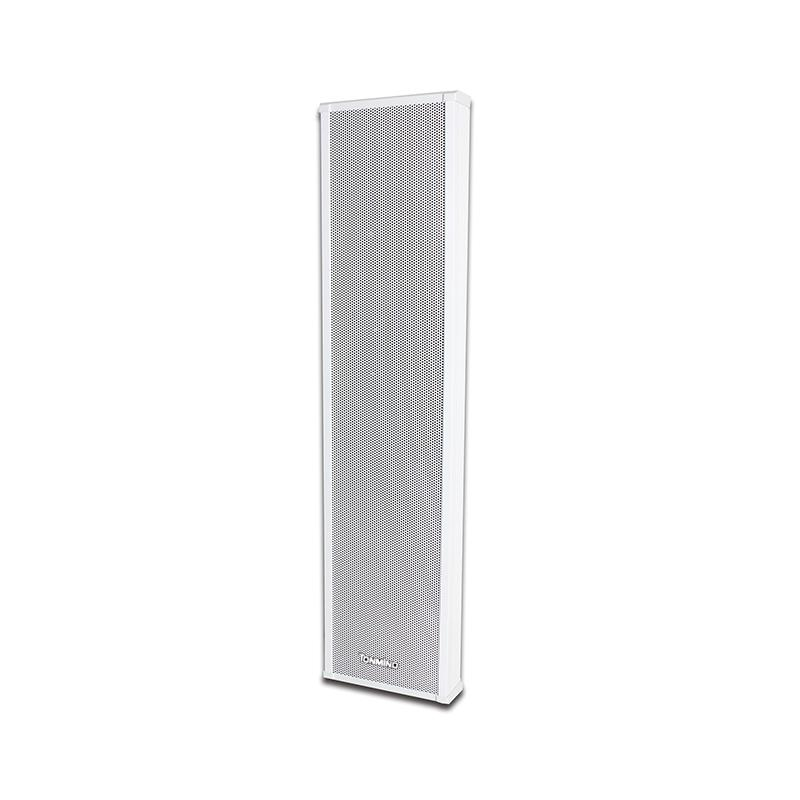
Testing the frequency response of a Column PA Speaker is crucial for ensuring top - notch audio quality. As a Column PA Speaker supplier, I've dealt with all sorts of situations in this area. In this blog, I'll share with you how to test the frequency response of a Column PA Speaker.
First off, let's understand what frequency response is. Simply put, it's how a speaker responds to different frequencies of sound. A good Column PA Speaker Column PA Speaker should be able to reproduce a wide range of frequencies accurately, from the deep bass to the high - pitched treble.
What You'll Need
Before you start testing, you need to gather a few essential tools.
- Audio Signal Generator: This device is used to generate test tones at various frequencies. You can set it to produce sine waves, square waves, or other waveforms at different frequencies within the audible range (usually from 20 Hz to 20,000 Hz).
- Power Amplifier: To drive the Column PA Speaker, you'll need a power amplifier. Make sure it can handle the power requirements of the speaker.
- Microphone: A high - quality microphone is necessary to pick up the sound output from the speaker. It should have a flat frequency response itself to ensure accurate measurements.
- Spectrum Analyzer: This tool analyzes the frequency content of the sound picked up by the microphone. It will display the amplitude of different frequencies, allowing you to see how the speaker is performing at each frequency.
Setting Up the Test Environment
The test environment plays a big role in getting accurate results. You want to minimize external noise and reflections. An anechoic chamber would be ideal, but since that's not always available, you can use a quiet room.
- Isolate the Area: Close all windows and doors to reduce outside noise. You can also use thick curtains or acoustic panels to absorb reflections from the walls, floor, and ceiling.
- Position the Speaker: Place the Column PA Speaker on a stable surface at a reasonable height. Usually, mounting it at ear - level gives the best results. Make sure it's facing the microphone directly.
- Position the Microphone: Place the microphone at a fixed distance from the speaker, typically around 1 - 2 meters. This distance should be consistent throughout the test.
Conducting the Test
Now that you've got everything set up, it's time to start the test.
- Connect the Equipment: Connect the audio signal generator to the power amplifier, and then connect the power amplifier to the Column PA Speaker. Connect the microphone to the spectrum analyzer.
- Generate Test Tones: Start with the lowest frequency (e.g., 20 Hz) on the audio signal generator. Set the amplitude to a reasonable level, but not so high that it causes distortion. Let the speaker play the tone for a few seconds to allow it to stabilize.
- Measure the Response: Use the spectrum analyzer to measure the amplitude of the frequency being played. Record the results. Then, increment the frequency by a certain amount (e.g., 10 Hz for low frequencies, 100 Hz for mid - frequencies, and 1000 Hz for high frequencies) and repeat the process until you reach the highest frequency (e.g., 20,000 Hz).
- Analyze the Results: Once you've completed the test for all frequencies, you'll have a set of data showing the amplitude of each frequency. Plot this data on a graph with frequency on the x - axis and amplitude on the y - axis. A flat line on the graph indicates a perfect frequency response, but in reality, there will be some variations.
Interpreting the Results
When looking at the frequency response graph, here are some things to keep in mind:
- Flatness: A flatter frequency response means the speaker is reproducing all frequencies more evenly. Look for any significant dips or peaks in the graph. Dips indicate frequencies that are being attenuated, while peaks mean those frequencies are being over - emphasized.
- Low - Frequency Response: For a Column PA Speaker, good low - frequency response is important, especially if it's used for music or announcements. A speaker with a deep bass response will have a relatively flat graph down to the lower frequencies.
- High - Frequency Response: High - frequency response affects the clarity and detail of the sound. A speaker that can reproduce high frequencies well will have a graph that doesn't drop off too quickly at the high end.
Different Types of Column PA Speakers
We also offer different types of Column PA Speakers, like the SIP Column Speaker SIP Column Speaker and the Outdoor Column Speaker Outdoor Column Speaker. The testing process for these speakers is similar, but there are some additional considerations.
For the SIP Column Speaker, since it's often used in IP - based communication systems, you may need to test its compatibility with different SIP protocols in addition to the frequency response. Make sure it can handle the audio signals transmitted over the network without degradation.
The Outdoor Column Speaker, on the other hand, needs to be tested in more rugged conditions. You may want to test it in different weather conditions to see how moisture, temperature, and wind affect its frequency response.
Why Testing is Important
Testing the frequency response of a Column PA Speaker is not just a formality. It has real - world implications.

- Customer Satisfaction: A speaker with a good frequency response will provide clear, balanced sound. This means better audio quality for your customers, whether they're using it in a small office, a large auditorium, or outdoors.
- Product Quality Control: By testing the frequency response, you can identify any manufacturing defects or issues early on. This helps you maintain high - quality standards for your products.
- Meeting Industry Standards: There are certain industry standards for audio quality. Testing the frequency response ensures that your Column PA Speakers meet these standards, which can be important for certifications and marketability.
Conclusion
Testing the frequency response of a Column PA Speaker is a detailed but essential process. As a supplier, I understand the importance of providing high - quality speakers. By following the steps outlined in this blog, you can accurately test the frequency response of your Column PA Speakers and ensure they deliver excellent audio performance.
If you're interested in purchasing Column PA Speakers or have any questions about our products, feel free to reach out. We're always happy to discuss your needs and help you find the right solution for your audio requirements.
References
- Audio Engineering Society (AES) publications on speaker testing.
- Textbooks on acoustics and audio systems design.