

Hey there! As a supplier of IP speakers, I often get asked about all sorts of technical aspects. One question that comes up quite a bit is, "What is the phase response of an IP speaker?" Well, let's dive right into it.
First off, let's understand what phase response means in general. In simple terms, phase response is how a system, in this case, an IP speaker, changes the phase of different frequencies in an audio signal. Every audio signal is made up of multiple frequencies, and when it passes through a speaker, each frequency can have its phase altered.
Think of it like a group of friends walking together. Each friend represents a different frequency. As they go through a doorway (the speaker), some friends might get a bit ahead or fall a bit behind. That difference in their positions is similar to the phase change in frequencies.
Now, why does phase response matter for an IP speaker? Well, it has a huge impact on the overall sound quality. When the phase response is off, it can lead to a phenomenon called phase distortion. This means that the different frequencies in the audio signal don't arrive at your ears in the right order or with the right timing.
Imagine listening to a symphony. If the violins, cellos, and trumpets don't play in sync because of phase distortion, the music will sound all jumbled up. It won't have that clear, cohesive sound that we expect. In the same way, an IP speaker with poor phase response can make the audio sound muddy, lack definition, and have a reduced sense of space.
For an IP speaker specifically, the phase response is affected by several factors. One of the main factors is the design of the speaker's crossover network. The crossover is like a traffic cop for the audio signal. It divides the signal into different frequency ranges and sends them to the appropriate drivers (like tweeters for high frequencies and woofers for low frequencies).
If the crossover is poorly designed, it can cause phase mismatches between the different drivers. For example, the high - frequency driver might start playing a fraction of a second before the low - frequency driver, even though they're supposed to play together. This can create a comb filtering effect, where certain frequencies are boosted and others are cancelled out, resulting in an uneven frequency response.
Another factor is the physical construction of the speaker. The size and shape of the speaker enclosure, as well as the placement of the drivers within it, can affect the phase response. For instance, if the tweeter is placed too far from the woofer, the high - frequency sound waves will have to travel a longer distance to reach your ears compared to the low - frequency waves. This can cause a phase difference between the two frequencies.
So, how do we measure the phase response of an IP speaker? There are several methods, but one common way is to use a test signal, such as a sine wave, and measure the phase shift at different frequencies. This can be done using specialized audio measurement equipment, like a spectrum analyzer or an audio analyzer.
By analyzing the phase response graph, we can see how the speaker is changing the phase of different frequencies. A flat phase response curve is generally considered ideal, as it means that the speaker is not introducing any significant phase changes across the frequency range.
Now, why should you care about the phase response when choosing an IP speaker? Well, if you're using the IP speaker for a critical audio application, like in a conference room, a theater, or a Public Address And Voice Evacuation System Public Address And Voice Evacuation System, the quality of the audio is crucial.
In a conference room, clear and accurate audio is essential for effective communication. Poor phase response can make it difficult to understand the speaker, especially when there are multiple people speaking or when there's background noise. In a theater, the phase response can affect the immersive experience. You want to feel like you're right in the middle of the action, and a speaker with good phase response can help create that sense of space and realism.

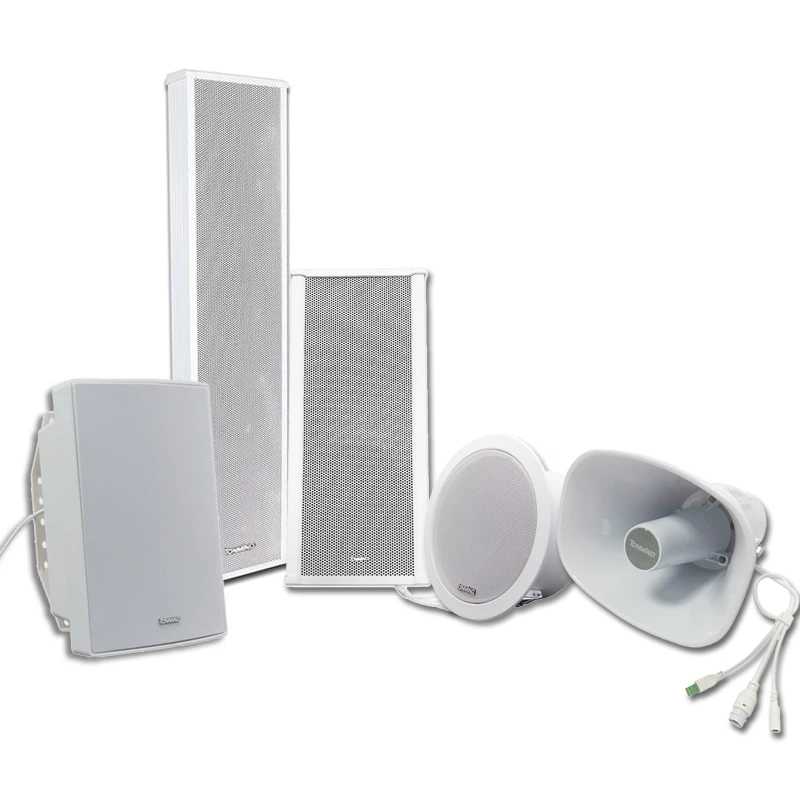
As a supplier of IP speakers, we take phase response very seriously. Our R & D team spends a lot of time designing and testing our speakers to ensure that they have excellent phase response. We use advanced simulation tools to model the speaker's performance and make adjustments to the crossover network and the enclosure design.
We also conduct real - world tests in our acoustic labs to verify the phase response measurements. We play a variety of audio signals, from music to speech, and listen carefully to how the speaker sounds. We make sure that the audio is clear, well - defined, and has a natural sense of space.
If you're in the market for an IP speaker, don't just focus on the frequency response or the power output. Pay attention to the phase response as well. A speaker with good phase response can make a huge difference in the quality of the audio.
Whether you're setting up a small home audio system or a large - scale commercial installation, choosing an IP speaker with excellent phase response will ensure that you get the best possible audio experience.
So, if you're interested in learning more about our IP speakers and how our advanced phase response technology can benefit your project, don't hesitate to reach out. We're always happy to have a chat, answer your questions, and discuss your specific audio needs. Whether it's for a simple PA system or a complex voice evacuation setup, we've got the right IP speaker for you. Contact us today to start the conversation and take your audio to the next level.
References:
- [1] "Audio Engineering Handbook" - A comprehensive guide on audio system design and speaker technology.
- [2] "Loudspeaker Design Cookbook" - Provides in - depth information on speaker design, including phase response considerations.