

In the realm of modern communication systems, IP Paging Adapters have emerged as a crucial component, offering seamless integration of paging capabilities into IP networks. As a leading supplier of IP Paging Adapters, we often receive inquiries regarding the minimum network bandwidth required for these devices to function optimally. This blog post aims to delve into this topic, providing a comprehensive understanding of the factors influencing bandwidth requirements and offering practical guidelines for ensuring a reliable and efficient paging system.
Understanding IP Paging Adapters
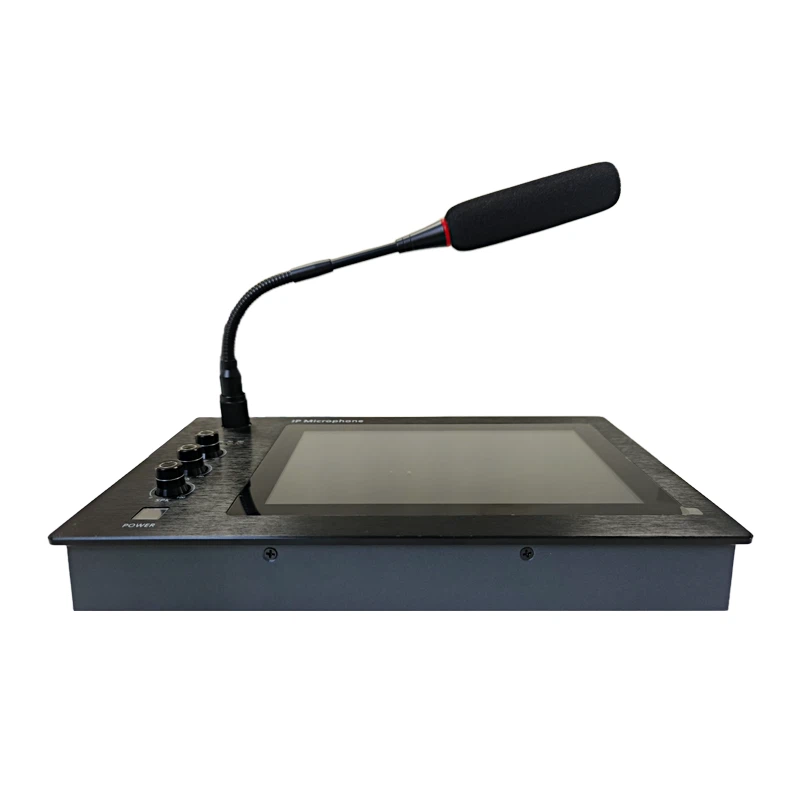
Before we dive into the bandwidth requirements, let's briefly review what an IP Paging Adapter is and how it operates. An IP Paging Adapter is a device that converts analog audio signals into digital packets and transmits them over an IP network. This allows for centralized control and distribution of audio messages to multiple endpoints, such as speakers or intercoms, across a network.
IP Paging Adapters typically support various audio codecs, which are algorithms used to compress and decompress audio data. The choice of codec can significantly impact the bandwidth requirements of the system, as different codecs offer varying levels of compression and audio quality.
Factors Influencing Bandwidth Requirements
Several factors influence the minimum network bandwidth required for an IP Paging Adapter. Understanding these factors is essential for accurately calculating the bandwidth needs of your specific application.
Audio Codec
As mentioned earlier, the audio codec used by the IP Paging Adapter plays a crucial role in determining the bandwidth requirements. Different codecs have different compression ratios, which affect the amount of data that needs to be transmitted over the network.
- G.711: This is a commonly used codec that offers high-quality audio with minimal compression. G.711 requires a bandwidth of approximately 64 kbps per channel.
- G.722: This codec provides better audio quality than G.711 at a slightly higher bandwidth of around 128 kbps per channel.
- G.729: G.729 is a highly compressed codec that offers good audio quality at a lower bandwidth of approximately 8 kbps per channel.
Number of Channels
The number of audio channels that need to be transmitted simultaneously also affects the bandwidth requirements. Each channel requires a certain amount of bandwidth, depending on the audio codec used. For example, if you are using G.711 codec and need to transmit 10 channels simultaneously, the total bandwidth required would be 640 kbps (64 kbps x 10 channels).

Sampling Rate
The sampling rate refers to the number of times per second that the audio signal is sampled. A higher sampling rate generally results in better audio quality but also requires more bandwidth. Common sampling rates include 8 kHz, 16 kHz, and 44.1 kHz.
Packetization Interval
The packetization interval is the time interval between consecutive audio packets. A shorter packetization interval results in lower latency but requires more bandwidth. Conversely, a longer packetization interval reduces the bandwidth requirements but increases the latency.
Calculating the Minimum Bandwidth
To calculate the minimum network bandwidth required for an IP Paging Adapter, you need to consider the factors mentioned above. Here's a step-by-step guide to help you calculate the bandwidth needs of your system:
- Determine the audio codec: Choose the audio codec that best suits your application based on the desired audio quality and bandwidth requirements.
- Identify the number of channels: Determine the number of audio channels that need to be transmitted simultaneously.
- Select the sampling rate: Choose the appropriate sampling rate based on the audio quality requirements of your application.
- Decide on the packetization interval: Select a packetization interval that balances latency and bandwidth requirements.
- Calculate the bandwidth per channel: Multiply the bit rate of the audio codec by the number of channels to calculate the total bandwidth required for all channels.
- Add overhead: Consider additional overhead, such as IP headers and network protocol overhead, which can add a few kilobits per second to the total bandwidth requirements.
Here's an example calculation:
- Audio codec: G.711 (64 kbps per channel)
- Number of channels: 5
- Sampling rate: 8 kHz
- Packetization interval: 20 ms
- Overhead: 5 kbps
Total bandwidth per channel = 64 kbps
Total bandwidth for all channels = 64 kbps x 5 = 320 kbps
Total bandwidth with overhead = 320 kbps + 5 kbps = 325 kbps
Ensuring Sufficient Bandwidth
Once you have calculated the minimum network bandwidth required for your IP Paging Adapter, it's important to ensure that your network infrastructure can support this bandwidth. Here are some tips to help you ensure sufficient bandwidth:
- Upgrade your network: If your existing network infrastructure does not have enough bandwidth, consider upgrading your network equipment, such as routers, switches, and cables, to support higher data rates.
- Prioritize traffic: Use Quality of Service (QoS) mechanisms to prioritize IP paging traffic over other types of traffic on the network. This helps ensure that the paging system receives the necessary bandwidth and minimizes the risk of packet loss or latency.
- Monitor network usage: Regularly monitor your network usage to identify any bottlenecks or issues that may affect the performance of the IP Paging Adapter. Use network monitoring tools to track bandwidth utilization and identify areas for improvement.
Conclusion
In conclusion, the minimum network bandwidth required for an IP Paging Adapter depends on several factors, including the audio codec, number of channels, sampling rate, and packetization interval. By understanding these factors and accurately calculating the bandwidth needs of your specific application, you can ensure that your IP Paging Adapter operates reliably and efficiently.
As a leading supplier of IP Paging Adapters, we are committed to providing our customers with high-quality products and comprehensive support. If you have any questions or need assistance with calculating the bandwidth requirements for your IP Paging Adapter, please do not hesitate to contact us. We would be happy to help you find the right solution for your needs.
References
- Cisco Systems. (2019). Understanding Voice Codecs. Retrieved from https://www.cisco.com/c/en/us/support/docs/voice/voice-quality/15936-122.html
- ITU-T. (2012). Recommendation G.711: Pulse code modulation (PCM) of voice frequencies. Retrieved from https://www.itu.int/rec/T-REC-G.711/en
- ITU-T. (2012). Recommendation G.722: 7 kHz audio-coding within 64 kbit/s. Retrieved from https://www.itu.int/rec/T-REC-G.722/en
- ITU-T. (2012). Recommendation G.729: Coding of speech at 8 kbit/s using conjugate-structure algebraic-code-excited linear-prediction (CS-ACELP). Retrieved from https://www.itu.int/rec/T-REC-G.729/en