

As a supplier of IP speakers, I often encounter inquiries from clients about the signal stability of IP speakers. Signal stability is a critical factor that directly impacts the performance and reliability of IP speakers in various applications. In this blog, I will delve into what signal stability of an IP speaker entails, the factors that affect it, and how we ensure high - level signal stability in our products.
What is Signal Stability of an IP Speaker?
Signal stability refers to the ability of an IP speaker to consistently receive, process, and reproduce audio signals without significant interruptions, distortions, or fluctuations. When an IP speaker has good signal stability, users can expect clear, uninterrupted audio output, whether it's for background music in a retail store, public announcements in a transportation hub, or emergency voice evacuation in a large building.
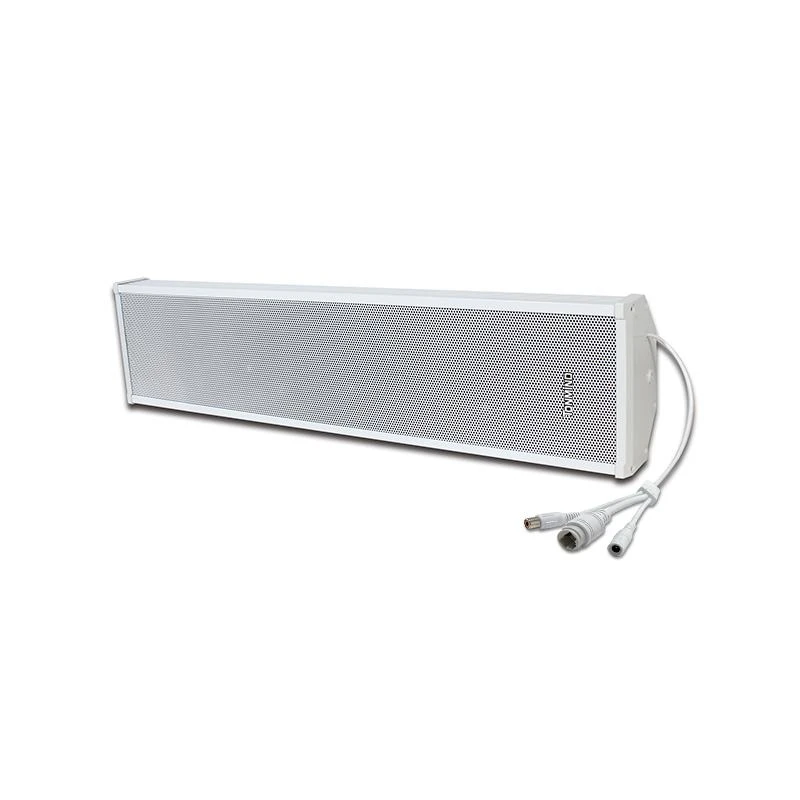

In the context of IP speakers, the audio signal is transmitted over an IP network. Unlike traditional analog speakers that rely on direct electrical connections, IP speakers use digital data packets to carry audio information. Signal stability, therefore, is closely related to the integrity of these data packets during transmission. A stable signal means that the packets arrive at the speaker in the correct order, without being lost or corrupted, so that the original audio can be accurately reconstructed.
Factors Affecting Signal Stability
Network Conditions
The quality of the IP network is one of the most significant factors influencing signal stability. Bandwidth is a key consideration. If the network has insufficient bandwidth, data packets may experience congestion, leading to delays or packet loss. For example, in a busy corporate environment where multiple devices are competing for limited network resources, an IP speaker may not receive a continuous stream of audio data, resulting in choppy or distorted sound.
Latency, or the delay between the transmission and reception of data, also affects signal stability. High latency can cause synchronization issues, especially in applications where multiple speakers need to play audio in unison, such as in a large - scale public address system. Moreover, network jitter, which is the variation in latency, can further disrupt the smooth flow of audio data, making the sound uneven or intermittent.
Speaker Hardware and Software
The internal components of an IP speaker play a crucial role in signal stability. A high - quality audio codec is essential for accurately encoding and decoding audio data. If the codec is of poor quality, it may introduce errors during the encoding or decoding process, leading to audio distortion.
The speaker's network interface also matters. A reliable network interface card (NIC) can better handle network traffic and ensure that data packets are received and processed efficiently. Additionally, the firmware and software running on the IP speaker need to be well - optimized. Outdated or buggy software can cause glitches in signal processing, affecting the overall stability of the audio output.
Environmental Interference
External environmental factors can also impact signal stability. Electromagnetic interference (EMI) from nearby electrical equipment, such as motors, power supplies, or wireless devices, can disrupt the network signal. For instance, in an industrial setting with a lot of heavy machinery, the strong electromagnetic fields generated by these machines can interfere with the wireless or wired network connection of an IP speaker, causing signal loss or degradation.
Physical obstructions can also be a problem, especially for wireless IP speakers. Walls, partitions, and large metal objects can block or weaken the wireless signal, reducing the range and stability of the speaker's connection to the network.
Ensuring Signal Stability in Our IP Speakers
At our company, we take several measures to ensure the signal stability of our IP speakers.
Network Optimization
We work closely with our clients to understand their network infrastructure and provide tailored solutions. For clients with limited bandwidth, we can recommend optimizing their network settings or upgrading their network equipment. Our IP speakers support advanced network protocols, such as Quality of Service (QoS), which allows us to prioritize audio data over other types of network traffic. By using QoS, we can ensure that the audio packets are given higher priority, reducing the risk of congestion and packet loss.
We also conduct thorough network testing in different environments to identify potential issues and develop solutions. Our testing includes simulating high - traffic scenarios, measuring latency and jitter, and evaluating the performance of our speakers under various network conditions.
High - Quality Hardware and Software
We use only the best - in - class audio codecs and network interfaces in our IP speakers. Our audio codecs are designed to provide high - fidelity audio reproduction with minimal distortion. The network interfaces are selected for their reliability and high - speed data transfer capabilities.
Our development team continuously updates and optimizes the firmware and software of our IP speakers. Regular software updates not only fix bugs but also improve the overall performance and signal stability of the speakers. We also provide remote management and monitoring capabilities, allowing our clients to easily check the status of their IP speakers and perform software updates as needed.
Environmental Adaptability
Our IP speakers are designed to be robust and resistant to environmental interference. We use shielding materials in our speaker enclosures to reduce the impact of EMI. For wireless speakers, we use advanced antenna technology to improve signal strength and range. We also offer different mounting options and enclosures to protect the speakers from physical damage and environmental factors, such as dust, moisture, and extreme temperatures.
Applications and the Importance of Signal Stability
The signal stability of IP speakers is crucial in a wide range of applications. In a Public Address And Voice Evacuation System, for example, clear and uninterrupted audio is essential for delivering important announcements and emergency instructions. Any signal instability could lead to misunderstandings or delays in response, putting people's lives at risk.
In the retail industry, IP speakers are used to play background music and promotional messages. A stable audio signal ensures a pleasant shopping environment and effectively conveys marketing information to customers. In educational institutions, IP speakers are used for classroom lectures, announcements, and multimedia presentations. Signal stability is necessary to ensure that students can clearly hear the content being presented.
Contact Us for Stable IP Speakers
If you are in need of IP speakers with excellent signal stability for your specific application, we are here to help. Our team of experts can provide you with detailed product information, technical support, and customized solutions. We understand the importance of signal stability in different scenarios and are committed to delivering high - quality IP speakers that meet your requirements. Whether you are setting up a small - scale audio system or a large - scale public address network, we have the right products and expertise to ensure a stable and reliable audio experience.
References
- Cisco Systems. (2019). Understanding Network Latency, Jitter, and Packet Loss.
- International Electrotechnical Commission (IEC). (2020). Standards for Audio Equipment and Signal Transmission.
- IEEE Communications Society. (2021). Research on Network Optimization for Audio - Visual Applications.