

As a supplier of VoIP ceiling speakers, I've been deeply involved in the industry and have witnessed the evolving demands and expectations surrounding audio quality. In this blog, I aim to explore the sound quality of VoIP ceiling speakers, offering insights based on our experiences and the latest technological advancements.
Understanding VoIP Ceiling Speakers
VoIP ceiling speakers are an integral part of modern audio communication systems. They are designed to be installed on ceilings, providing a discreet and effective way to distribute voice and audio content in various settings, such as offices, schools, retail stores, and public spaces. The technology behind VoIP (Voice over Internet Protocol) enables these speakers to transmit audio data over an IP network, offering flexibility and scalability.
VoIP Ceiling Speaker combines the benefits of digital audio transmission with the convenience of ceiling installation. By leveraging the power of IP networks, these speakers can be easily integrated into existing communication infrastructure, allowing for centralized control and management.
Factors Affecting Sound Quality
The sound quality of VoIP ceiling speakers is influenced by several factors, including the speaker's design, the quality of the audio codec, the network conditions, and the acoustic characteristics of the environment. Let's take a closer look at each of these factors.
Speaker Design
The design of the speaker plays a crucial role in determining its sound quality. Key components, such as the driver, enclosure, and crossover network, all contribute to the overall performance. High-quality drivers with large diaphragms and powerful magnets can produce more accurate and detailed sound, while well-designed enclosures can minimize resonance and distortion.
In addition, the placement of the speaker also affects the sound distribution. Ceiling speakers are typically designed to provide a wide and uniform coverage area, ensuring that the audio can be heard clearly throughout the room. However, the actual coverage may vary depending on the speaker's design and the ceiling height.
Audio Codec
The audio codec is responsible for encoding and decoding the audio data transmitted over the IP network. Different codecs have different levels of compression and quality, which can significantly impact the sound quality of the VoIP ceiling speakers.
Popular audio codecs used in VoIP systems include G.711, G.722, and Opus. G.711 is an uncompressed codec that provides high-quality audio but requires a relatively large bandwidth. G.722 is a compressed codec that offers a good balance between quality and bandwidth, while Opus is a more advanced codec that provides excellent audio quality at low bit rates.
Network Conditions
The quality of the IP network has a direct impact on the sound quality of the VoIP ceiling speakers. A stable and reliable network with low latency and jitter is essential for ensuring clear and uninterrupted audio transmission.
Factors such as network congestion, bandwidth limitations, and packet loss can all cause audio problems, such as delayed audio, choppy sound, or dropped calls. To mitigate these issues, it is important to ensure that the network is properly configured and optimized for VoIP traffic.
Acoustic Environment
The acoustic characteristics of the environment where the VoIP ceiling speakers are installed also play a significant role in the sound quality. Factors such as room size, shape, layout, and surface materials can all affect the way sound travels and reflects within the space.
To achieve the best sound quality, it is important to consider the acoustic properties of the environment and select the appropriate speakers and installation locations. For example, in large open spaces, multiple speakers may be required to provide adequate coverage, while in rooms with hard surfaces, acoustic treatment may be necessary to reduce echo and reverberation.
Assessing Sound Quality
When evaluating the sound quality of VoIP ceiling speakers, it is important to consider a variety of factors, including frequency response, clarity, detail, and intelligibility. Here are some key metrics and techniques used to assess sound quality:
Frequency Response
The frequency response of a speaker refers to its ability to reproduce different frequencies of sound. A wide and flat frequency response indicates that the speaker can reproduce a more accurate and balanced sound across the entire audible spectrum.
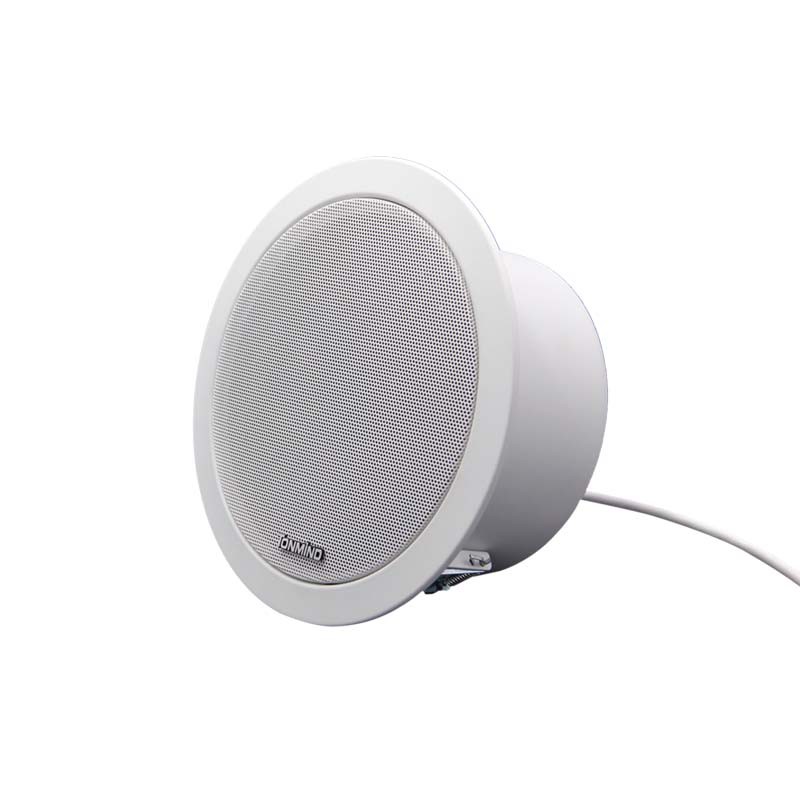

To measure the frequency response of a speaker, a test signal is typically played through the speaker, and the output is measured using a microphone and a spectrum analyzer. The results are then plotted on a graph to show the speaker's response at different frequencies.
Clarity and Detail
Clarity and detail refer to the speaker's ability to reproduce the nuances and subtleties of the audio signal. A clear and detailed sound allows the listener to distinguish between different instruments and voices, and to hear the full range of audio effects.
To assess the clarity and detail of a speaker, a variety of audio materials can be used, including music, speech, and sound effects. The listener should pay attention to the presence of any distortion, noise, or other artifacts that may affect the overall quality of the sound.
Intelligibility
Intelligibility refers to the speaker's ability to convey speech clearly and effectively. In applications such as public address systems and voice communication, intelligibility is of utmost importance.
To measure the intelligibility of a speaker, a speech intelligibility test can be conducted using standardized test materials and procedures. The results are typically expressed as a percentage, indicating the proportion of words that are correctly understood by the listener.
Our Approach to Sound Quality
At our company, we are committed to providing high-quality VoIP ceiling speakers with exceptional sound quality. We use the latest technologies and materials in our speaker design and manufacturing process, and we conduct rigorous testing and quality control to ensure that our products meet the highest standards.
One of the key features of our VoIP Ceiling Speaker is its advanced audio processing technology. Our speakers are equipped with built-in audio codecs and digital signal processors (DSPs) that can optimize the audio signal in real-time, reducing noise, distortion, and echo, and enhancing the clarity and intelligibility of the sound.
In addition, we offer a wide range of models and configurations to meet the diverse needs of our customers. Whether you need a speaker for a small office, a large retail store, or a public venue, we have the right solution for you. Our speakers are available in different sizes, power ratings, and frequency responses, and we can also customize the speakers to meet your specific requirements.
Comparison with Other Types of Speakers
When considering the sound quality of VoIP ceiling speakers, it is also important to compare them with other types of speakers, such as ONVIF Ceiling Speaker and IP Paging Speaker.
ONVIF ceiling speakers are designed to be used in surveillance systems, providing audio monitoring and recording capabilities. While these speakers are primarily focused on capturing clear audio for security purposes, they may not offer the same level of sound quality as VoIP ceiling speakers, which are optimized for audio distribution and communication.
IP paging speakers, on the other hand, are specifically designed for public address systems, providing a way to broadcast voice messages and announcements over a large area. While these speakers are typically louder and more powerful than VoIP ceiling speakers, they may not offer the same level of audio fidelity and clarity.
Conclusion
In conclusion, the sound quality of VoIP ceiling speakers is influenced by a variety of factors, including the speaker's design, the quality of the audio codec, the network conditions, and the acoustic characteristics of the environment. By understanding these factors and taking the appropriate measures to optimize them, it is possible to achieve high-quality audio performance in a wide range of applications.
As a supplier of VoIP Ceiling Speaker, we are dedicated to providing our customers with the best possible sound quality and performance. Our advanced audio processing technology, combined with our extensive range of models and configurations, ensures that we can meet the diverse needs of our customers in various industries.
If you are interested in learning more about our VoIP ceiling speakers or would like to discuss your specific requirements, please feel free to contact us. We look forward to the opportunity to work with you and to provide you with the highest quality audio solutions.
References
- Cisco Systems. (2023). Voice over IP (VoIP) Fundamentals.
- Audio Engineering Society. (2023). Standards and Recommendations for Audio Systems Design and Installation.
- International Telecommunication Union (ITU). (2023). Recommendations for Audio Codecs and Transmission Standards.